Locating a queen bee is one of the first real tests for a new beekeeper. It is also one of the most common struggles. A healthy hive can hold 30,000 to 60,000 bees in summer. That is a lot of moving bodies. For a beginner, finding one specific bee in that crowd feels impossible at first. I have chased queens across frames more times than I can count. The skill comes with practice and a trained eye. This queen bee identification guide will show you how to spot her. You will learn what to look for and where to look first. A solid how to do a hive inspection gives you a calm method for every visit.
The queen is the heart of the colony. Without her, the workforce ages and shrinks. A strong queen lays 1,500 to 2,000 eggs per day in peak season. That is more than her own body weight. A failing queen means fewer foragers, less honey, and a higher risk of pests. The colony may try to replace her on its own. You need to know what that looks like. If you plan to start your first hive, the complete beginner’s guide to starting your first honey beehive explains how to choose bees and equipment. But learn to identify the queen before your first real inspection. That skill will save you hours of worry.
| Feature | Queen | Worker | Drone |
|---|---|---|---|
| Abdomen | Long and tapered, extends past wings | Shorter and rounded, ends at wing tips | Broad and blunt, short abdomen |
| Thorax | Shiny and slightly wider, less hair | Hairy and dull, smaller | Very wide, big and fuzzy |
| Eyes | Smaller, set apart | Oval, on sides | Huge, meet at top of head |
| Stinger | Smooth and curved, can sting multiple times | Barbed, stings once then dies | No stinger, drone cannot sting |
| Role | Lays all fertilized eggs | Forage, nurse, guard, build comb | Mate with virgin queens |
Why Does Finding the Queen Matter?
Finding a queen is not just a party trick. It is a core management skill. The queen is the only female in the hive with fully developed ovaries. She lays nearly all the eggs. If she is missing, the colony cannot replace its workforce for long. A colony without a queen becomes nervous and noisy. It often makes a high pitched roar when you open the lid. You will want to check for her during regular inspections. The how to do a hive inspection guide covers the basics of opening a hive calmly. But the queen’s presence tells you a lot about overall health. If she is there and laying well, most problems are manageable. If she is failing or gone, you need to act quickly.
The USDA Agricultural Research Service notes that a strong queen can lay 1,500 to 2,000 eggs per day in peak season. That is more than her own body weight. Put another way, a colony of 50,000 bees may contain eggs laid in just a few weeks. When queens age or fail, that egg production drops fast. Brood pattern becomes spotty. Workers start to draw queen cells to replace her. If you cannot find the queen, you may miss those early warning signs. That is why queen identification is part of good common bee disease and pest management. A failing queen weakens the whole hive. Pests and diseases move in.
The USDA counted over 2.7 million honey bee colonies in the United States in 2022. Every one of those colonies depends on a queen that can lay, feed, and hold the workforce together. Learning to find her on a brood frame is not optional. It is a basic beekeeping skill. Once you spot her, you can check her size, color, and movement. That tells you if she is the original queen or a replacement. The next section covers her physical traits.
What Does the Queen Bee Look Like?
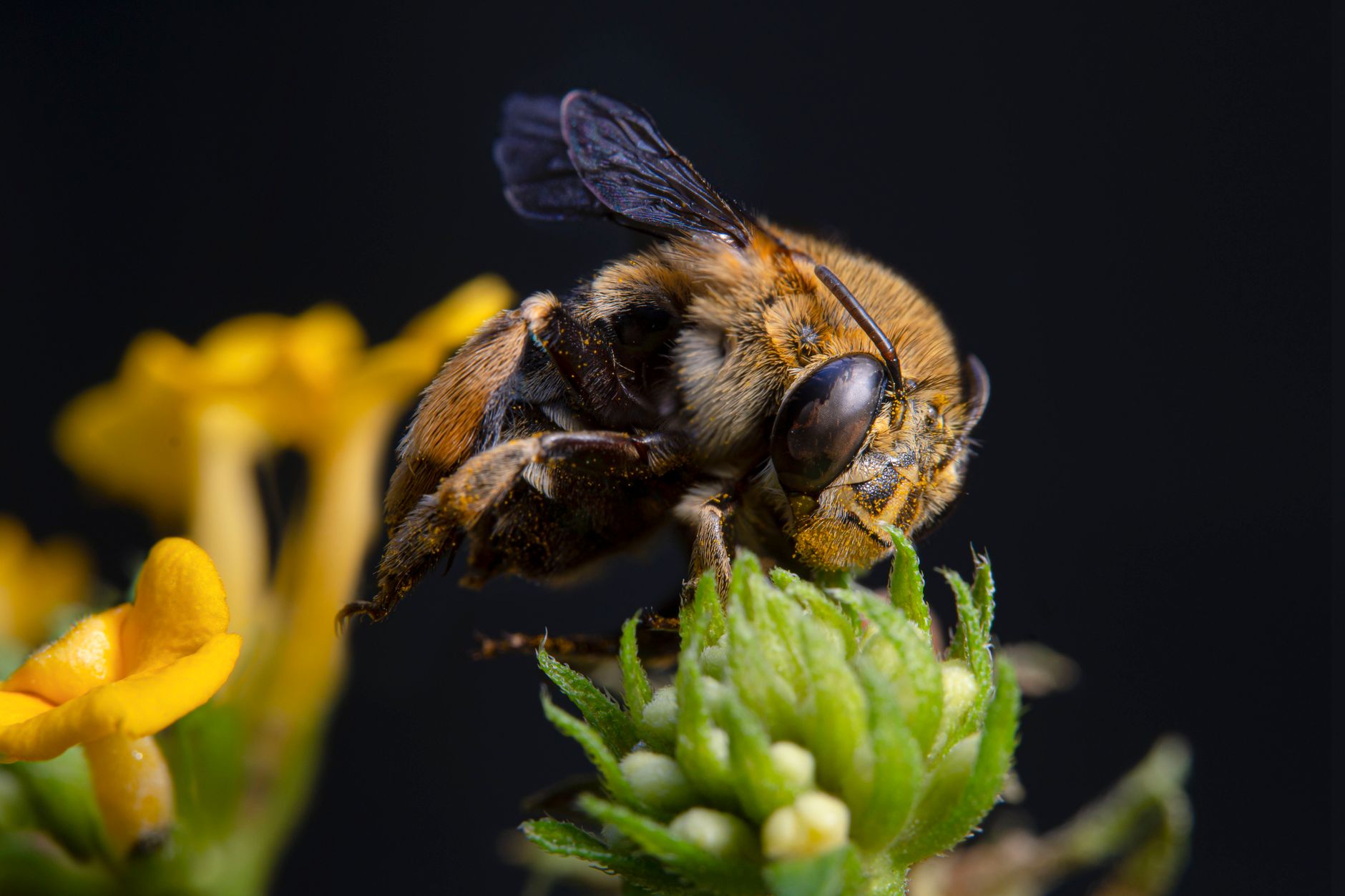
At first glance a queen can look like a worker. But once you know her shape, she stands out. The queen has a long, tapered abdomen that extends well past her wing tips. Her thorax is slightly larger and often shinier than a worker’s. She has a smooth, curved stinger without barbs. Her back is often darker, sometimes with less hair. Leg color can vary by race. Italian queens often have orange or gold bands. Carniolan queens are darker and more slender. The best way to train your eye is to study a marked queen. You can buy a queen marking pen and practice on a frame where she is already marked. No, the pen does not hurt her. Use a tiny dot of non-toxic paint on her thorax.
Workers are about 15 millimeters long. A mated queen can be 20 millimeters or more. Her legs are longer and splay out like a spider. When she walks, she has a slow, deliberate gait. Workers scurry. The queen glides. Her abdomen often drags slightly. She keeps her wings folded over her back. Drones have big blunt bodies and huge eyes that meet at the top of their head. A queen’s eyes are smaller and set apart. Her abdomen is more pointed than a drone’s. If you see a bee that looks like a stretched worker with a dark shiny back, you are probably looking at the queen.
Marking the queen helps you learn faster. But do not rely on a mark alone. Marks can wear off or be removed by workers. Always confirm by body shape and movement.
- Abdomen: long, tapered, extends well beyond the wing tips
- Thorax: shiny, slightly wider, and less hairy than a worker’s
- Stinger: smooth and curved, can sting multiple times without dying
- Movement: slow, deliberate, often surrounded by a circle of nurse bees
Where Is the Queen Most Likely to Be?
Knowing where to look saves a lot of time. The queen rarely visits honey supers. Honey frames are above the brood nest and mostly wax and nectar. The queen stays where the colony needs new bees. That means the brood frames. Look for frames with eggs and young larvae. The queen will usually be on a frame that has empty cells ready for eggs. In a Langstroth hive, start with the middle frames. The brood nest sits there. Work your way outward slowly. She may also be on an inner cover or a wall if you moved too fast. If you check the bee swarm guide you will see that a swarm often contains the old queen. Before a swarm leaves, the queen may be near the entrance or on the bottom board. Most days, though, she is on a brood frame.
Hold the frame over the hive when you inspect. If the queen falls, she falls back into the hive. That is a good habit. Look first at the center of the frame. Then scan the outside edges. Queens often hide near the corners. A frame with fresh eggs is a strong clue. If you see eggs, the queen has been there in the last day or two. She may be on the next frame. Use a small amount of smoke. Too much smoke drives her to the bottom. Too little smoke makes the workers run. A gentle puff at the entrance and under the lid is enough.
Inspect on a warm, sunny afternoon when foragers are out. The hive will be calmer. Fewer bees mean easier searching. Avoid cold or rainy days. The queen does not like being chilled. Begin with the frame you think is most likely. If you spend more than a couple of minutes on one frame, set it aside and move on. Patience and order beat speed.
How Do You Spot the Queen During a Hive Inspection?
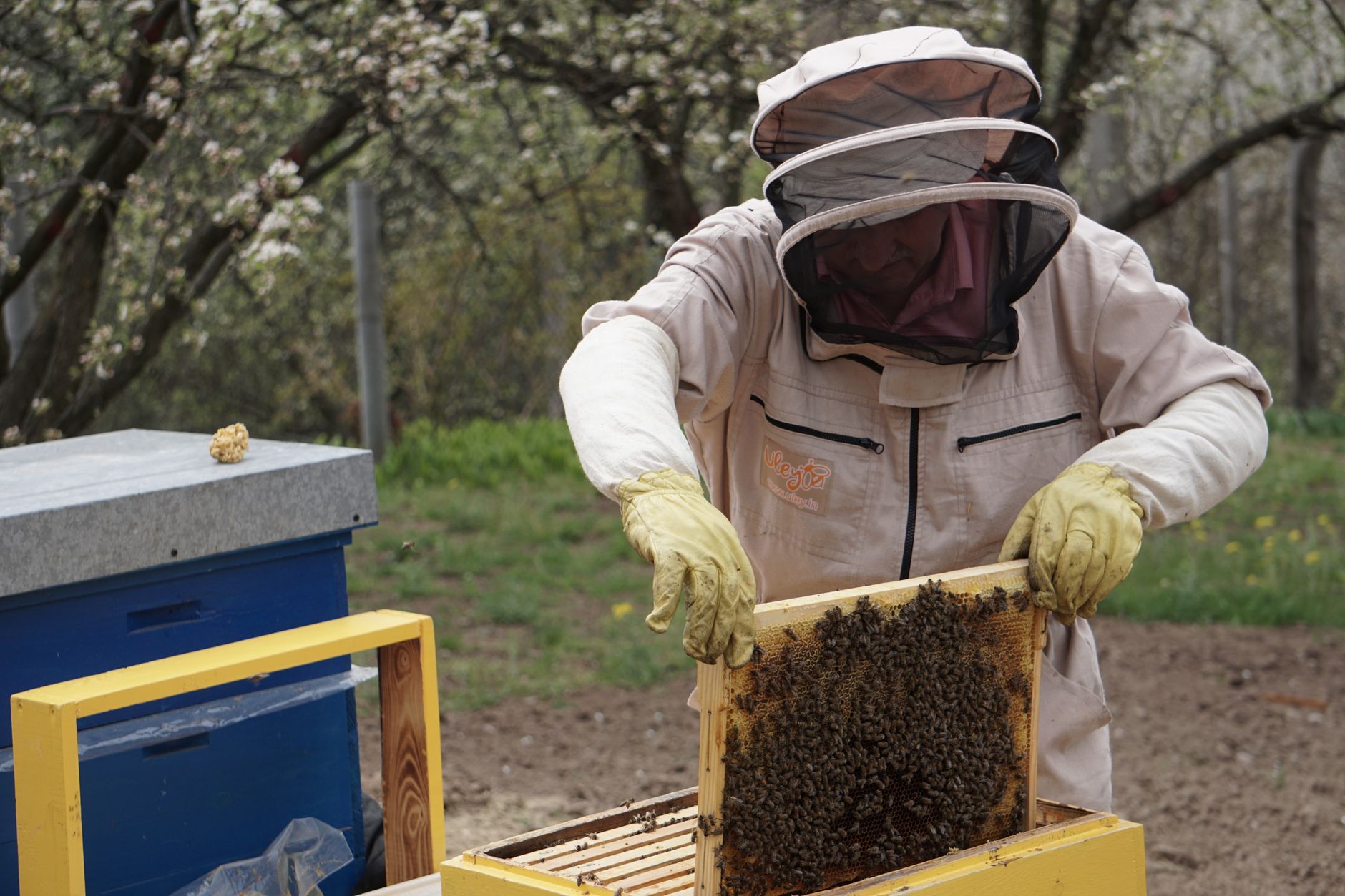
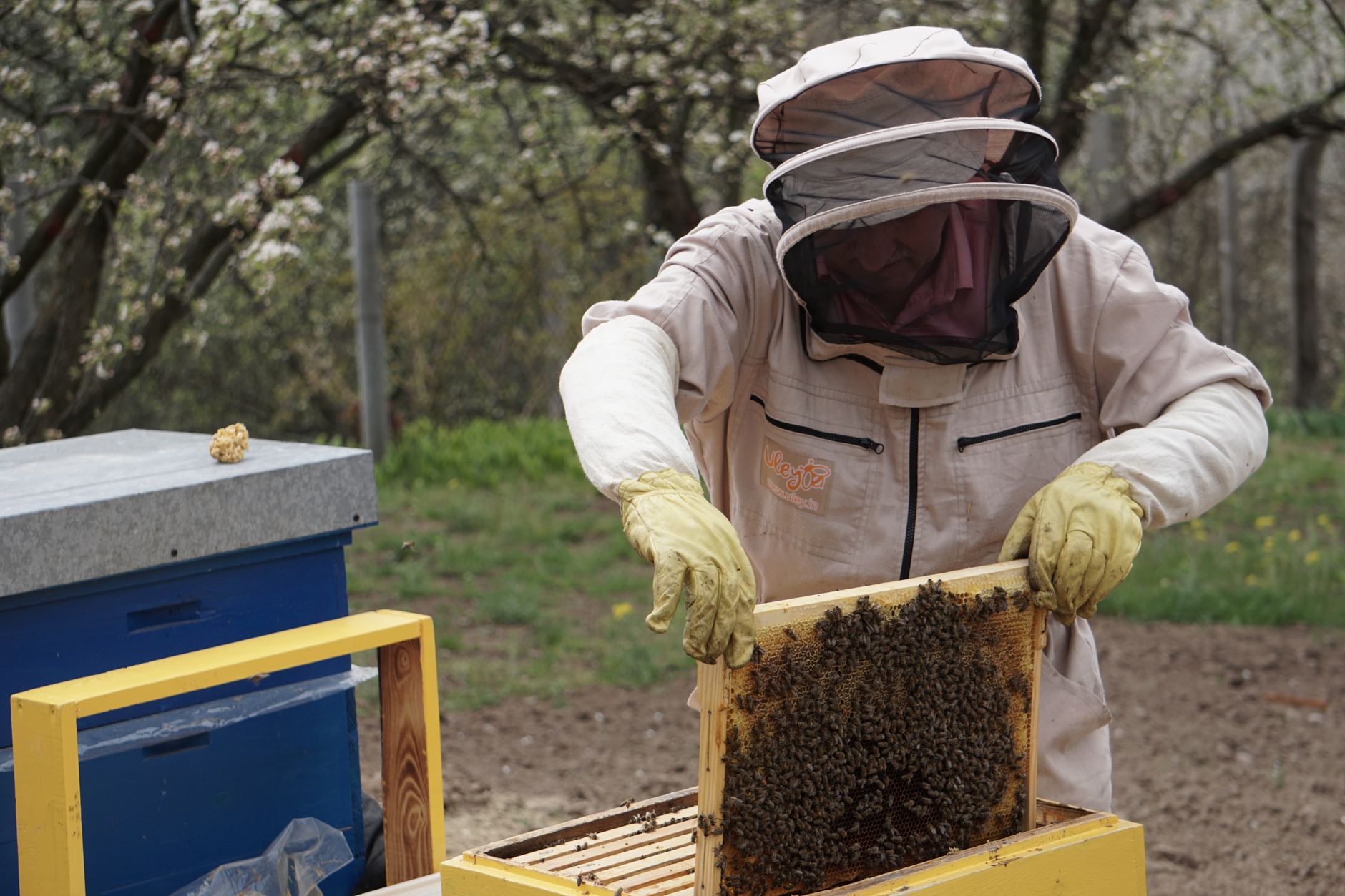
Spotting the queen is a skill built on a repeatable method. Start with your equipment ready. A beekeeping tools and accessories guide lists frame grips, hive tools, and gentle brushes. Wear your veil and suit. Light a smoker with cool fuel. Puff a little smoke at the entrance. Wait 30 seconds. Then crack the lid and puff once more. Remove the outer cover and inner cover slowly. Set them aside so bees can walk back. The goal is to avoid crushing a bee, especially the queen.
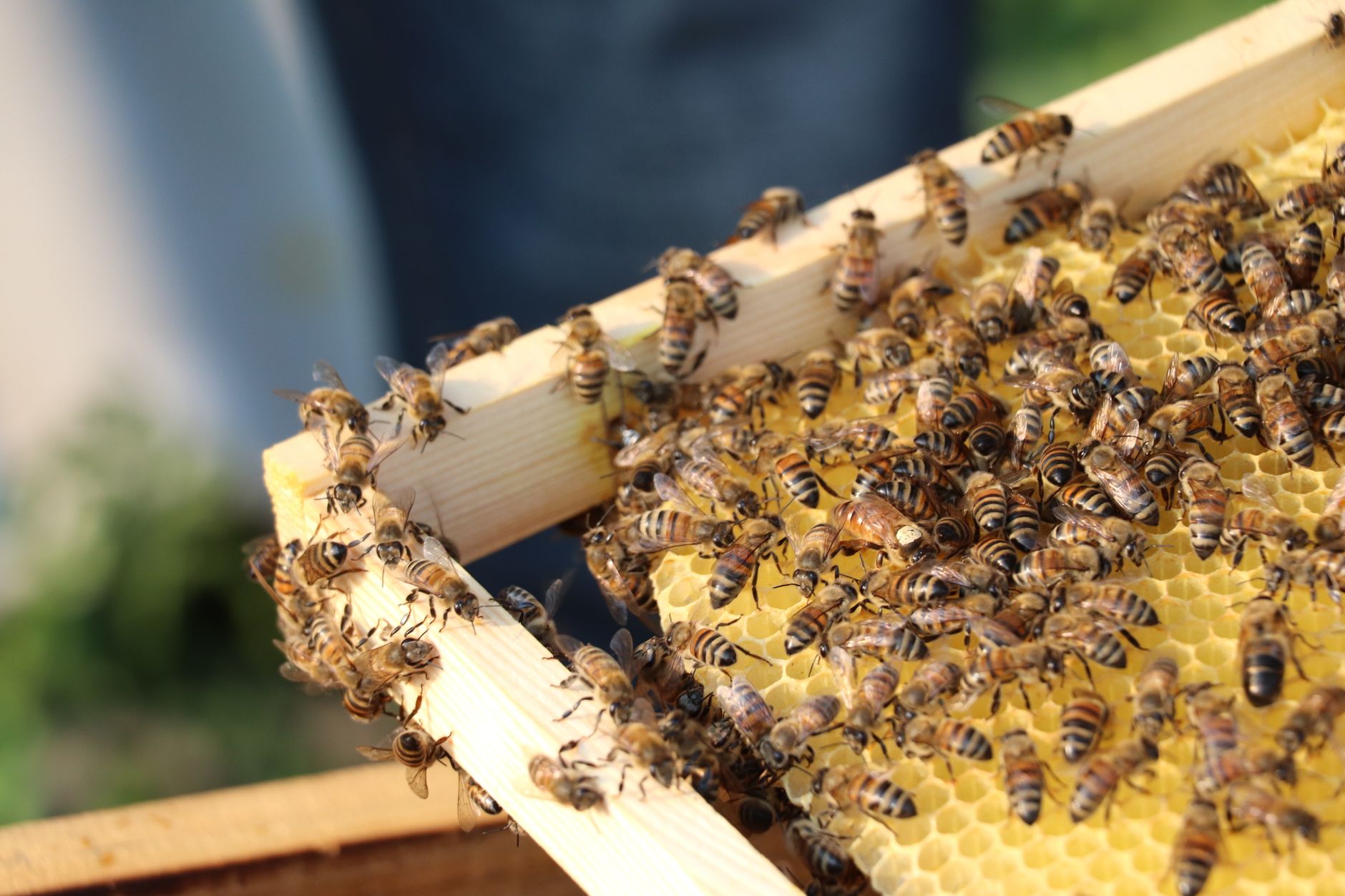
Lift out the first frame next to the wall. This is usually a honey or pollen frame. Check it quickly and set it outside the hive in a frame rest. The next few frames are brood frames. Hold each frame by the ears. Let the bees settle. Turn the frame so the sunlight falls across it. Look for the queen’s long abdomen. Search the face of the comb first. Then tilt the frame and scan the other side. Move in a slow, steady rhythm. If you do not see her, place the frame back gently. Do not shake bees off the frame. If she is there, you will likely see a circle of workers parting around her. That is one of the best visual cues. Workers feed her and turn to face her. The cluster around the queen is sometimes called a retinue.
The Honey Bee Health Coalition recommends regular queen checks as part of colony health planning. A quick check for eggs may be enough if you cannot find her. Eggs look like tiny grains of rice standing upright in the bottom of cells. If you see eggs, you had a queen at least three days ago. If you also see young larvae, she has been present within the last week. That evidence can substitute for a visual sighting. But do not skip the visual check entirely. A marked queen is far easier to find. The mark is a small dot on her thorax. It does not wash off in rain. It gives you a clear target in a moving mass of bees.
What Are the Best Tricks for Marking and Tracking Queens?
Marking queens makes identification much easier. Many beekeepers use the international queen marking color code. The color changes by year. The code cycles through five colors. White, yellow, red, green, and blue. For example, years ending in 1 or 6 use white. Years ending in 2 or 7 use yellow. Years ending in 3 or 8 use red. Years ending in 4 or 9 use green. Years ending in 5 or 0 use blue. This lets you know the queen’s age at a glance. You can mark a queen with a non-toxic paint pen or a small numbered disk. The disk gives a unique ID. Some beekeepers also clip one wing. Clipping prevents swarming flights. It requires a steady hand and practice. I recommend learning marking before clipping.
To mark a queen, pick her up gently by her wings or use a queen catcher. A queen catcher is a small clip with soft foam. It holds her still without harm. Touch the pen to her thorax. Just a dot. Release her at the top of the same frame. Watch to be sure the workers accept her. If they ball her, she may need a quick reintroduction. That is rare. Most workers ignore a marked queen. Keep a small notebook or use a hive inspection app. Record the date, color, and brood pattern. That record helps you decide when to replace her. It also tells you which queen survived the winter. For more on replacing a queen, see how to introduce a new queen.
- Years ending in 1 or 6: white
- Years ending in 2 or 7: yellow
- Years ending in 3 or 8: red
- Years ending in 4 or 9: green
- Years ending in 5 or 0: blue
What Should You Do If You Cannot Find the Queen?
Not every inspection ends with a confirmed sighting. That is okay. A good beekeeper learns to read the hive instead of panicking. First, look for eggs. Eggs are the best sign of a queen. They are tiny and hard to see. Use a magnifying glass or your phone camera with a macro lens. If you see eggs, the queen was there within the last three days. If you do not see eggs but see larvae, the queen was there within the last week. A queenless hive will have no eggs and no young larvae. You may see multiple queen cells. The bees may be loud and defensive. Workers may lay eggs, but those eggs become drones. Laying workers produce shot brood. That means multiple eggs per cell, often on the sides.
If you suspect queenlessness, you have options. You can add a frame of eggs from another colony. The bees will raise a new queen from those eggs. You can buy a mated queen from a local breeder. Or you can combine the queenless hive with a queenright hive using the newspaper method. The how to split a beehive guide covers building new colonies without buying queens. If you need to purchase bees, check buying bees guide packages nucs splits. The main point is not to wait too long. A hive without a queen for three or four weeks may be too weak to recover. Check again in a few days before taking action. A virgin queen is small and fast. She is very hard to spot. She may already be in the hive after a swarm. Give her time to mate and begin laying.
Finally, remember that practice builds the skill. Start with a marked queen. Use good light. Work slowly. The University Extension Services offer regional queen-spotting workshops. Many local beekeeping clubs host queen-finding practice days. The more you look, the faster your eye becomes. Soon you will spot her without thinking.
Frequently Asked Questions
How can I tell a queen bee from a worker?
Look at the abdomen. A queen’s abdomen is long, tapered, and extends well past the wing tips. A worker’s abdomen is shorter and rounder. The queen also has a shinier, less hairy thorax and a slower gait.
Do queen bees sting beekeepers?
A queen can sting, but she rarely does. Her stinger is smooth and curved, so she can sting multiple times. She usually stings only rival queens when they fight inside the hive.
What does a marked queen look like?
A marked queen has a small dot of non-toxic paint on her thorax. The dot is usually white, yellow, red, green, or blue. The color tells you the year she was introduced.
How often should I look for the queen?
You do not need to find the queen on every inspection. Check for eggs and young larvae each time. Do a visual queen search once every two or three weeks or when you suspect a problem.
Can a queen leave the hive?
Yes. A queen leaves for mating flights and during a swarm. She may also leave if the hive is heavily disturbed. Most of the time she stays inside on brood frames.
What if I accidentally crush the queen?
Do not panic. If the colony has eggs or young larvae, they can raise a replacement. If not, you can buy a mated queen or combine the hive with another colony. Act quickly to keep the hive from failing.
What Should You Remember?
- Learn queen anatomy first. A long abdomen, shiny thorax, and smooth stinger are your main clues.
- Inspect brood frames in the center of the hive. The queen rarely visits honey supers.
- Use smoke sparingly and work on warm afternoons. Calm bees make queen spotting easier.
- Mark your queen with the international color code. It speeds up every future inspection.
- Look for eggs and young larvae as a backup sign. Eggs mean a queen was present within three days.
- Move slowly and hold frames over the hive. If she falls, she falls back inside.
- Practice with marked queens first. Your eye will improve faster than you expect.
This article is for general information only and is not veterinary or legal advice. Beekeeping is regulated in most regions and involves live animals with their own health needs , always follow local regulations and best practices, and consult a qualified apiarist, extension service, or veterinarian for bee-health or disease concerns.