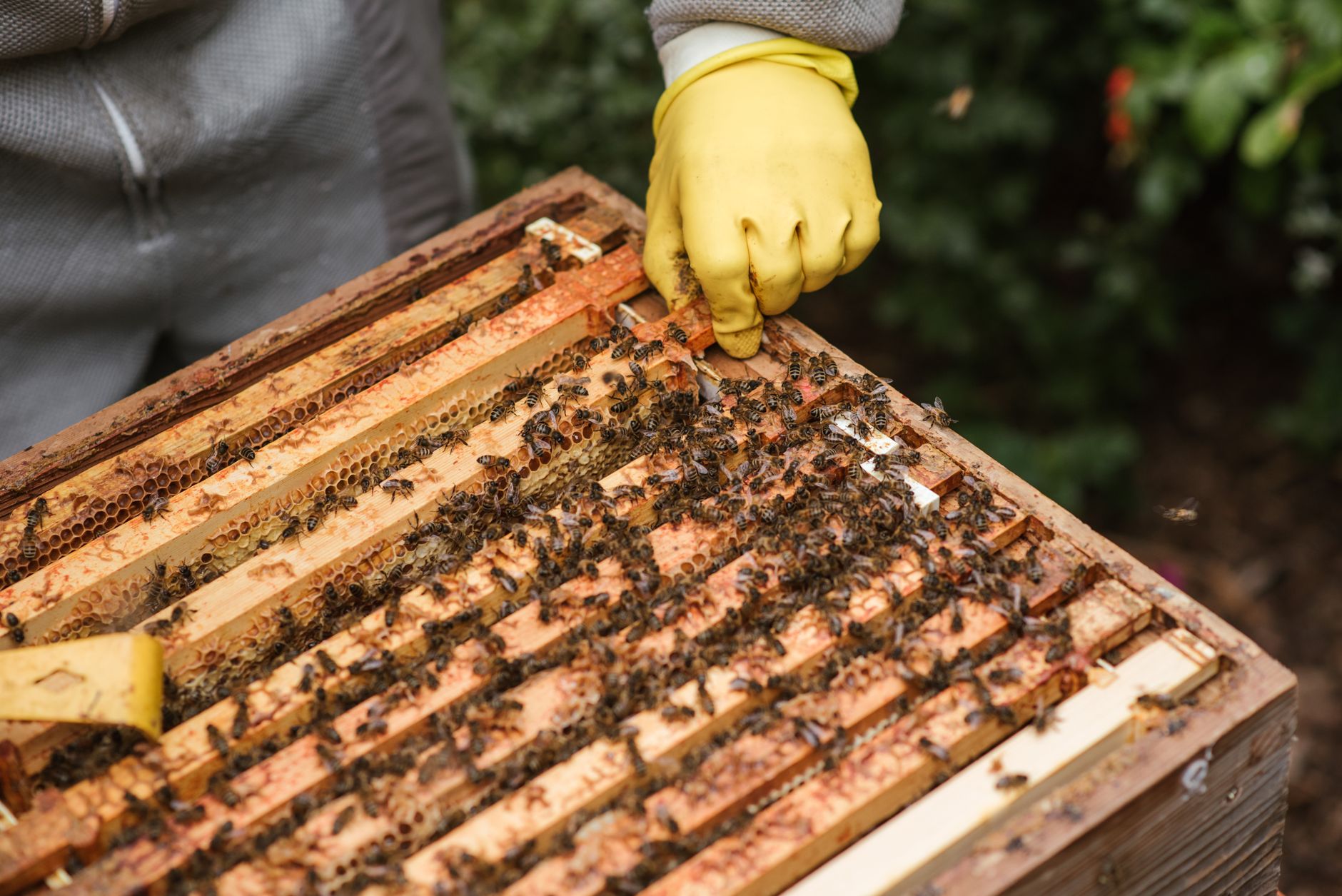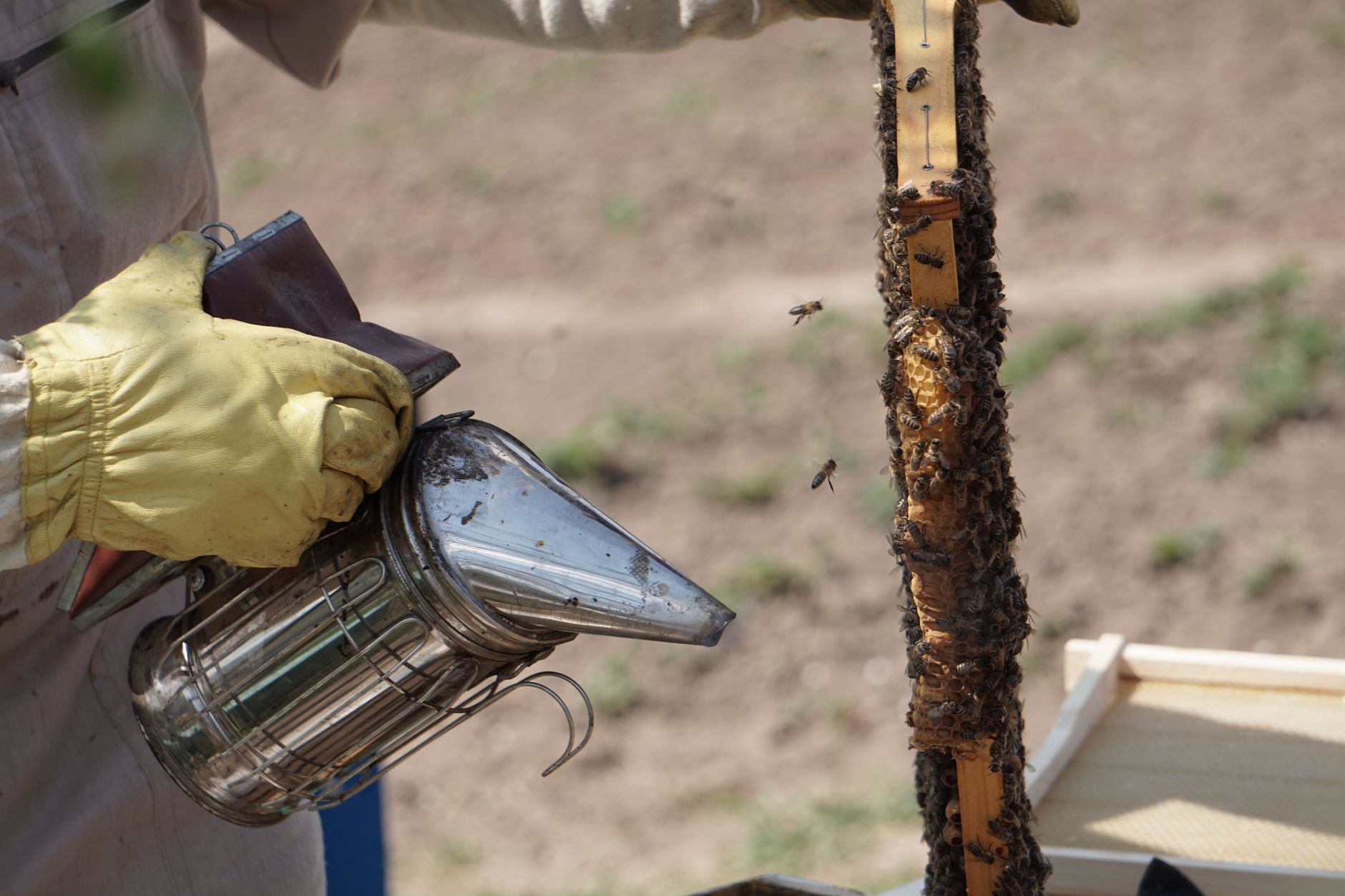
Choosing gloves seems like a small decision until a hive turns defensive. Bees read movement more than color. A beekeeper in stiff, oversized gloves will fumble frames, roll bees, and trigger more stings. Glove choice is safety gear and communication. I have worn leather, nitrile, and ventilated gloves in all weather. Each type changed how I moved and how many stings I took. Before you buy, read our hive inspection guide so you know what you are looking for inside the colony. The right glove supports slow, confident handling. The wrong glove makes every inspection feel like a boxing match.
Methodology for this comparison is straightforward. I evaluate gloves on five things: sting protection, dexterity, durability, cuff coverage, and price. I have used these gloves in spring comb checks, summer honey pulls, and late-autumn feeding. I have also watched beginners struggle with oversized cowhide and too-thin nitrile. Material matters. The gauntlet cuff, palm thickness, and back panel determine where you get stung and how tired your hands feel. For the rest of the kit, see our beekeeping tools and accessories guide. If you are still building a setup, our best beekeeping suits article covers jacket and veil pairing.
Why 2026? The season is warmer earlier in many regions. Higher temperatures make leather gloves miserable. At the same time, varroa pressure is still the single biggest threat to managed colonies. The Honey Bee Health Coalition lists varroa monitoring as essential management. USDA Agricultural Research Service work links varroa pressure to colony stress and higher winter loss. The American Beekeeping Federation reports that winter losses routinely run 30 to 45 percent in many operations. When colonies are stressed by Varroa destructor, they are more defensive. Your hands are on the front line. Good glove decisions help you inspect faster and reduce bee crushing. That is good for the colony and your confidence.
No single glove fits every apiary. Calm Italian stock in a backyard may let you work with nitrile. A feral swarm collected from a barn wall may require cowhide. The type of work also changes the answer. Requeening, grafting, and queen marking demand finger sensitivity. Moving deep supers demands grip and wrist coverage. I also think about hygiene. Disposable nitrile is safer when you inspect between apiaries. Reusable leather can carry wax moth eggs or disease organisms. See our common bee diseases and pests guide for what you are trying not to spread. That is why this comparison breaks down five glove types rather than crowning one best glove.
How Do the Top Options Compare?
| Glove Type | Best For | Sting Protection | Dexterity | Durability | Price |
|---|---|---|---|---|---|
| Cowhide Leather | Heavy hive work and defensive colonies | Very high | Low | High | Check price |
| Goatskin Leather | General inspections and comb manipulation | High | Medium | Medium | Check price |
| Nitrile Disposable | Queen marking, nuc work, and cutouts | Low to medium | Very high | Disposable | Check price |
| Ventilated Leather | Hot climate inspections | High | Medium-high | Medium | Check price |
| Nitrile-Coated Nylon | Budget and high-dexterity work | Medium | High | Medium-low | Check price |
Prices are approximate as of early 2026. Sting protection varies with fabric backing, leather thickness, and cuff design.
1. Cowhide Leather Gloves , Best for Heavy Hive Work and Defensive Colonies
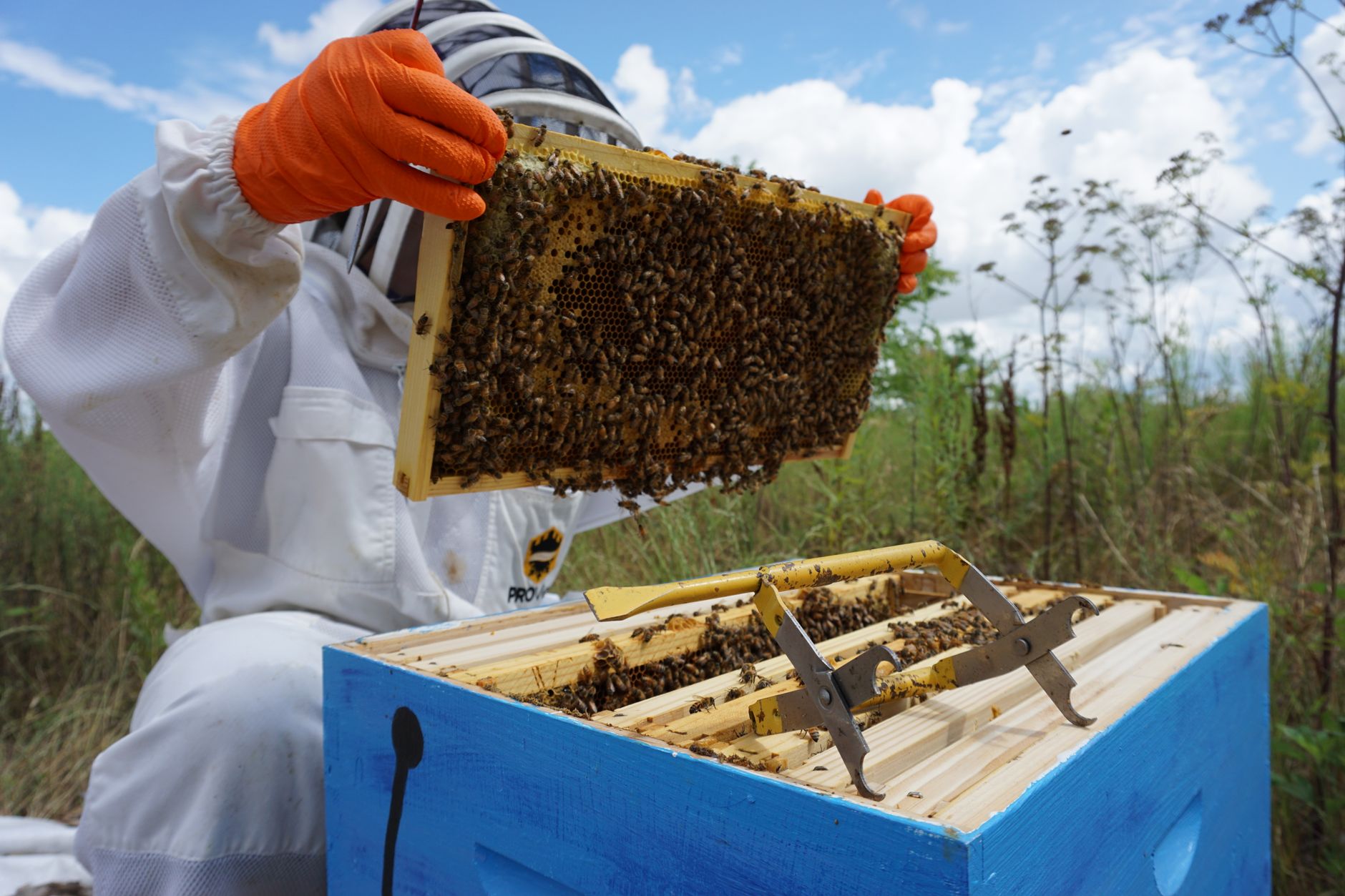
Full-grain cowhide is the heavyweight of beekeeping gloves. The leather usually runs 0.8 to 1.1 millimeters thick. That stops most stings before the point reaches skin. The long gauntlet cuff reaches mid-forearm and often has an elastic band. For early spring brood checks or aggressive colonies, I want that coverage. It lets me focus on the frames instead of the bees crawling on my wrists. This type also pairs well with a jacket if you check our beekeeping mistakes beginners guide to avoid common setup errors.
The main tradeoff is dexterity. You lose pinching force and fine motor control. Picking up a queen cage clip feels like working in oven mitts. Requeening becomes frustrating. The leather also stiffens after rain and repeated propolis exposure. But for moving deep supers or working a hot hive, cowhide is hard to beat.
Cleaning cowhide is a chore. Sweat soaks the interior, and beeswax and propolis turn the surface waxy. I dry them away from direct sun. Some keepers dust the inside with talc to reduce dampness, but the gloves never feel new again. Check cowhide beekeeping gloves on Amazon.
Key strengths:
- ✅ Excellent sting protection
- ✅ Long gauntlet cuff covers wrists
- ✅ Very durable for heavy lifting
- ✅ Affordable compared to goatskin
- ✅ Easy to find in local farm stores
- ❌ Poor dexterity for small tasks
- ❌ Stiffens after getting wet
- ❌ Interior gets sweaty and hard to clean
Who it’s for: Choose cowhide leather gloves if you run large colonies, work aggressive hives, or move heavy supers.
2. Goatskin Leather Gloves , Best for General Beekeeping and Improved Dexterity
Goatskin is thinner and more flexible than cowhide, usually 0.6 to 0.8 millimeters. It molds to your hand after a few inspections. That means better frame handling and fewer crushed bees. New beekeepers often prefer goatskin because it gives them a more natural grip. The tradeoff is puncture resistance. A determined bee can sting through goatskin, especially along seams or on a wet palm. For calm Italian or Carniolan colonies, it still blocks enough stings.
Inspecting with goatskin gloves feels closer to working barehanded. You can turn frames by the ears and feel the difference between honey, brood, and empty comb. The glove back may be leather or cotton. Cotton backs breathe better but do not stop stings. Leather backs are hotter and heavier but add protection.
Goatskin has less abrasion resistance than cowhide. Dragging frames against the glove wears holes faster. I go through one pair roughly every two seasons. The price is usually higher than cowhide, but many beekeepers say the comfort is worth it. Check goatskin beekeeping gloves on Amazon.
Key strengths:
- ✅ Better finger movement and grip
- ✅ Conforms to hand over time
- ✅ Lighter and cooler than cowhide
- ✅ Enough sting protection for calm hives
- ✅ Dries faster than cowhide
- ❌ Lower puncture resistance
- ❌ Wears out faster with heavy use
- ❌ Often costs more than cowhide
Who it’s for: Pick goatskin leather gloves if your hives are manageable and you want to improve frame handling without sacrificing all sting protection.
3. Nitrile Disposable Gloves , Best for Queen Handling, Nuc Work, and Hygienic Inspections
Nitrile disposable gloves are the opposite of leather. They are thin, usually 6 to 8 mil. They let you feel every bee and frame edge. That makes queen handling safer. Many queen breeders and small-nuc keepers use nitrile exclusively. If you are learning to identify queens, our queen bee identification guide is a good companion for this glove type.
Sting protection is low. Bees can sting through nitrile, but the smooth surface gives them less to grab. That often reduces the number of stings you take compared with fuzzy leather. The disposables also help prevent disease transfer between hives. If you inspect a colony with suspect brood, you can simply throw the gloves away before moving to the next yard.
The downside is wrist coverage. Nitrile exam gloves stop at the wrist unless you buy extended-cuff versions. You need a long-sleeved suit or separate gauntlets. They also rip on frame edges, nails, and heavy propolis. But at a few cents per pair, replacement is painless.
Key strengths:
- ✅ Maximum finger sensitivity
- ✅ No propolis buildup
- ✅ Throw away between apiaries
- ✅ Very cheap per pair
- ✅ Easy to find at drugstores and farm supply stores
- ❌ Little wrist coverage
- ❌ Rips on frame edges and nails
- ❌ Stings come through more often
Who it’s for: Choose disposable nitrile gloves for queen marking, grafting, nucleus work, or any inspection where touch matters more than sting protection.
4. Ventilated Leather Gloves , Best for Hot Climate Inspections
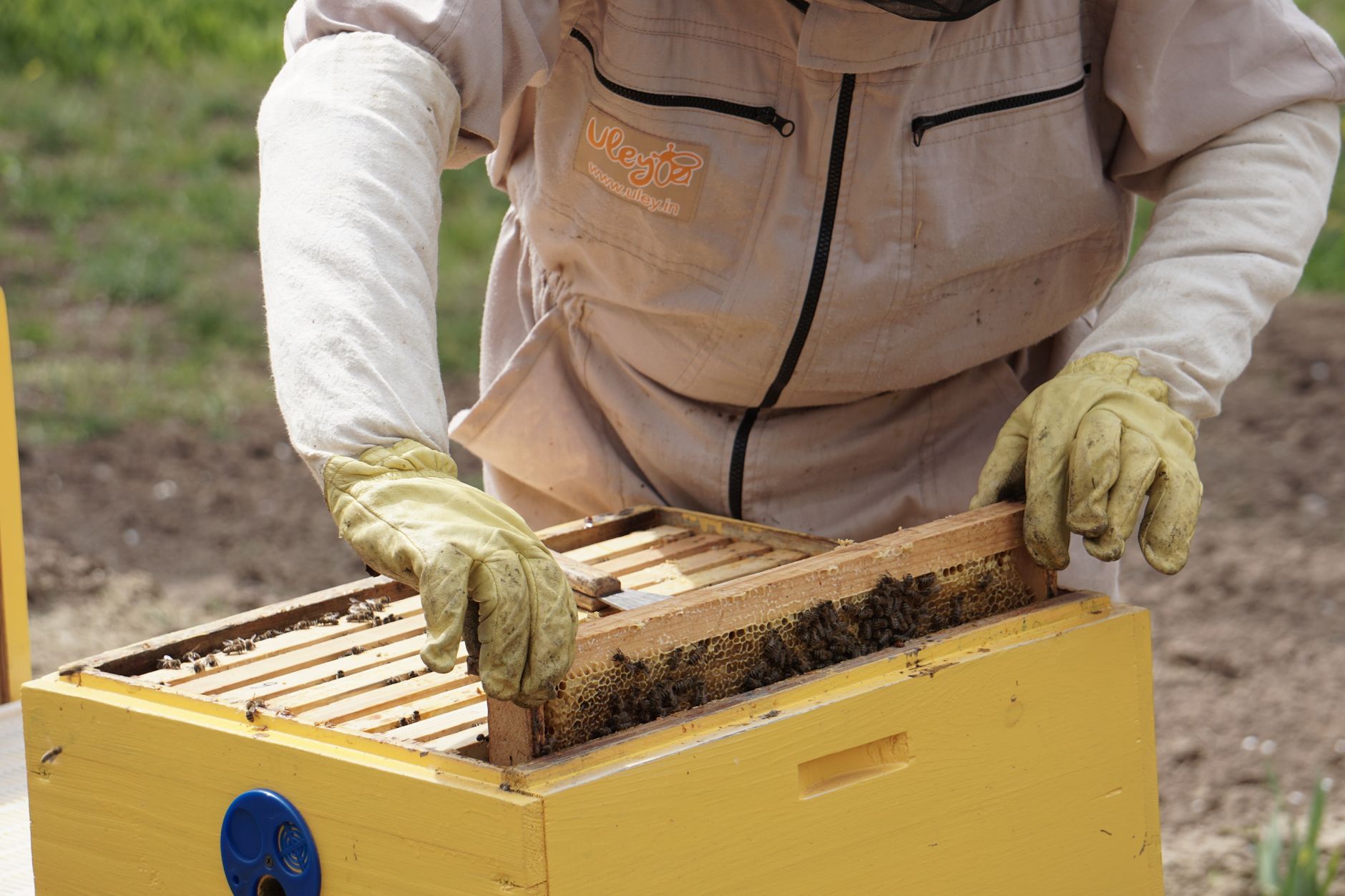
Ventilated leather gloves combine leather palms and fingers with mesh or cotton panels on the back. The idea is simple: protect the surfaces that touch frames and bees while letting heat escape. In a Texas or Georgia summer, this can be the difference between finishing an inspection and quitting after three frames. The mesh back is not sting proof. A bee trapped between the mesh and your skin can still tag you.
Most ventilated designs use goatskin or split cowhide on the palm. Some use a tight-weave cotton back instead of open mesh. That back breathes without exposing as much skin. Dexterity usually falls between cowhide and nitrile. You can work frames normally, but small queen clips remain awkward.
These gloves collect less sweat and dry faster than full leather. I like them for summer honey pulls and long queen checks. The stitching on the mesh can wear out before the leather. If you keep hives in a hot climate, this may be your everyday glove. Check ventilated beekeeping gloves on Amazon.
Key strengths:
- ✅ Much cooler during summer inspections
- ✅ Good palm and finger protection
- ✅ Lighter than full leather
- ✅ Dries quickly after washing
- ✅ Reduces sweat and hand fatigue
- ❌ Mesh back vulnerable to stings
- ❌ Can cost more than basic leather
- ❌ Less durable mesh stitching
Who it’s for: Get ventilated leather gloves if you keep bees in a hot, humid climate and still want leather-grade sting protection on palms.
5. Nitrile-Coated Nylon Gloves , Best for Budget-Friendly High-Dexterity Work
Nitrile-coated nylon gloves are a newer middle ground. The base is a knit nylon glove, and the palm and fingers are dipped in a rough nitrile coating. The back remains breathable knit. They cost far less than leather and grip wet frames better than smooth nitrile disposables. I use them for light inspections, feeding checks, and swarm collection where speed matters.
Sting resistance is only medium. A bee can sting through the knit back, and the coating is thin. The knit material also gives bees something to grab. That means you will take more stings than with cowhide, but fewer than bare hands. For calm colonies, the trade is acceptable.
Durability is mixed. The coating resists abrasion, but the knit cuffs pill and unravel. They wash easily in cold water and do not absorb propolis like leather. If a glove gets stung badly or torn, replacement cost is low. This makes them a solid budget choice for beekeepers who already have a good suit and just need hand protection.
Key strengths:
- ✅ Excellent dexterity
- ✅ Low purchase price
- ✅ Breathable knit back
- ✅ Good grip on wet or propolis-covered frames
- ✅ Machine washable
- ❌ Medium sting protection
- ❌ Knit cuffs can unravel
- ❌ Not for aggressive colonies
Who it’s for: Pick nitrile-coated nylon gloves if you want a cheap, washable, high-dexterity option for calm hives and quick tasks.
Frequently Asked Questions
Are leather beekeeping gloves sting proof?
No glove is completely sting proof. Thick cowhide blocks most stings, but bees can still sting through seams, thin goat hide patches, or wet leather. Slow movements and well-fitting gloves reduce stings more than extra thickness alone.
Can I use regular dish gloves or nitrile exam gloves?
Yes for light work. Nitrile exam gloves give great dexterity but little wrist coverage and tear easily. Dish gloves are thicker but have no long cuff. Both work for quick checks but not for heavy hive work.
How do I clean beekeeping gloves?
For leather, scrape off propolis and wax, wipe with cold water and a soft brush, then air dry far from heat. For nitrile-coated nylon and many ventilated gloves, use a cold machine wash and hang dry.
Do ventilated gloves protect against stings on the back of the hand?
Partially. The mesh panels let heat out but bees can sting through the fabric. Some ventilated gloves use tight-weave cotton that reduces this risk, but back-of-hand protection is not as strong as leather.
What cuff length is best?
A cuff that reaches at least 6 to 10 inches up the forearm protects the wrist gap between glove and suit. Long gauntlet cuffs on leather gloves are best for aggressive hives, while nitrile gloves need a long-sleeved suit.
Should beginners buy leather or nitrile gloves?
Most beginners should start with goatskin leather gloves. They give better sting protection than nitrile and more dexterity than cowhide. Once you build confidence and learn calm movements, you can try disposable nitrile for delicate tasks.
What Should You Remember?
- Material choice: Goatskin leather balances sting protection and dexterity for most hive inspections.
- Sting defense: Cowhide leather offers the highest puncture resistance but feels stiff and hot.
- Touch work: Nitrile disposables win for queen marking and nuc handling, but leave wrists exposed.
- Hot weather: Ventilated leather reduces sweat while keeping palm protection.
- Budget option: Nitrile-coated nylon gloves provide grip and breathability at a low price.
- Fit matters: A snug wrist and long cuff stop more stings than thicker leather.
- Hygiene: Wash or replace gloves between apiaries to slow disease spread and varroa hitchhikers.
This article is for general information only and is not veterinary or legal advice. Beekeeping is regulated in most regions and involves live animals with their own health needs , always follow local regulations and best practices, and consult a qualified apiarist, extension service, or veterinarian for bee-health or disease concerns.