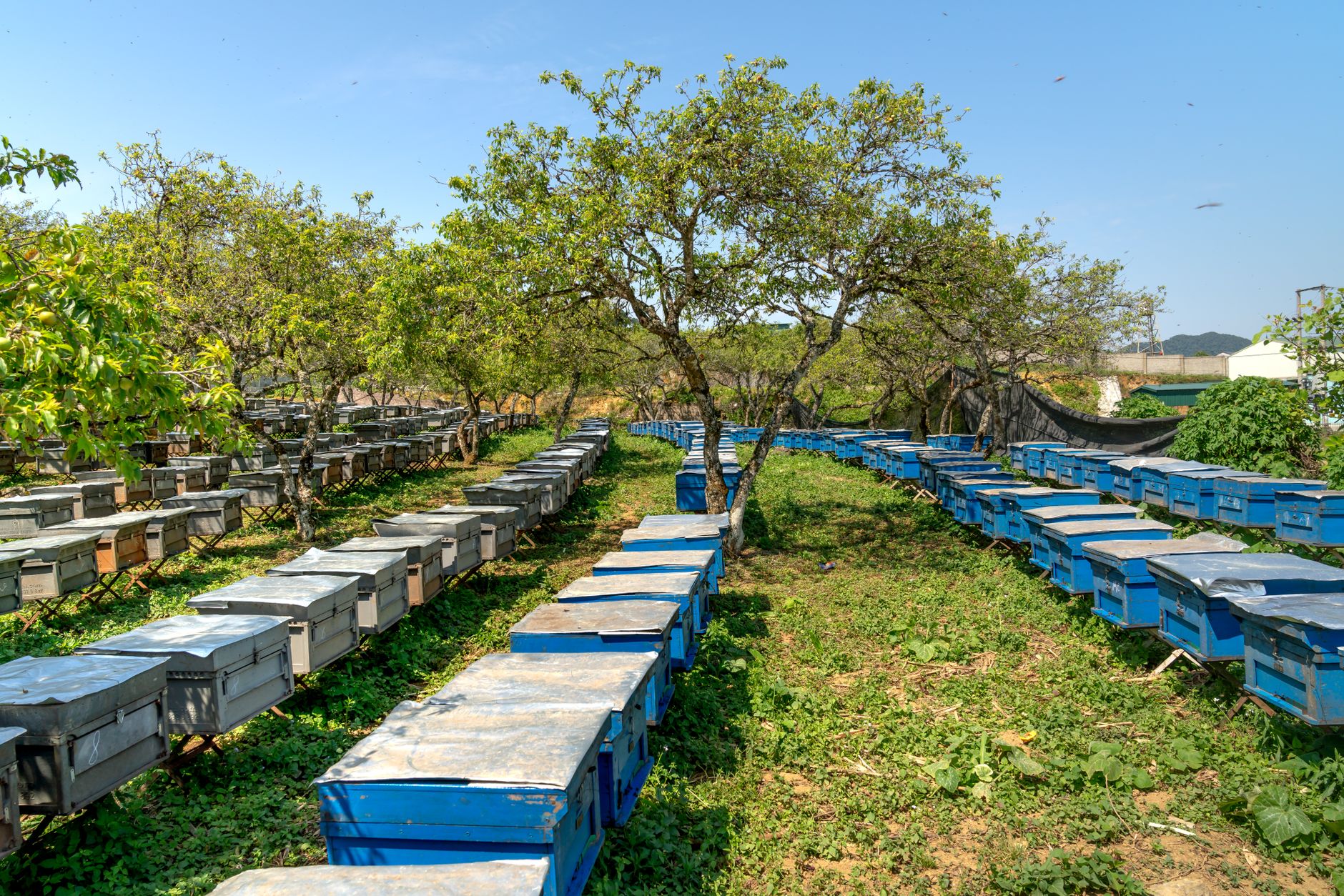
The global beekeeping market was valued at USD 7.20 billion in 2023 and reached USD 7.47 billion in 2024, according to Fortune Business Insights. If its 4.37% CAGR holds, the 2026 market size lands near USD 8.1 billion. U.S. producers managed 2.51 million honey-producing colonies in 2023 and produced 139 million pounds of honey. For first-time setup costs and choices, see the complete beginners guide to starting your first honey beehive.
Market value alone does not tell beekeepers whether their own operation will work. Honey yields rose in 2023 while prices fell, which means revenue gains came from volume. U.S. production value increased 2% despite an 8% price drop. USDA Agricultural Research Service supports the honey bee health research behind these production trends. Global market projections are useful for long-range planning, but local input costs, winter losses, and honey contracts drive annual returns. For a realistic per-hive look, see how much honey does one hive produce.
Colony loss data provides a different view of industry health. The Bee Informed Partnership found 48.2% annual loss in 2022-23, up from 39.0% the previous year. Varroa mites remain the top manageable stressor, and they can undermine yield gains quickly. Monitoring and treatment are not optional for commercial operators. The varroa mite treatment guide covers timing and chemical controls. The implications are clear: higher loss rates raise replacement costs, lower honey prices squeeze margins, and local varroa control can decide whether an operation stays profitable. FAO tracks global beekeeping and honey-production statistics.
Global Beekeeping Market Set to Grow
| Stat | Detail | Source |
|---|---|---|
| 2023 market size | USD 7.20 billion | Fortune Business Insights |
| 2024 market size | USD 7.47 billion | Fortune Business Insights |
| Projected 2032 market size | USD 10.52 billion | Fortune Business Insights |
| Forecast CAGR, 2024-2032 | 4.37% | Fortune Business Insights |
| Implied 2026 market size | About USD 8.1 billion | HiveMindGuide calculation from Fortune Business Insights |
U.S. Hive Counts and Honey Production
| Stat | Detail | Source |
|---|---|---|
| Honey-producing colonies, 2023 | 2.51 million, up 4% from 2022 | USDA NASS, 2024 |
| Total honey production, 2023 | 139 million pounds, up 11% | USDA NASS, 2024 |
| Yield per colony, 2023 | 55.3 pounds, up 6% | USDA NASS, 2024 |
| Average honey price, 2023 | 252 cents per pound, down 8% | USDA NASS, 2024 |
| Total production value, 2023 | USD 349 million, up 2% | USDA NASS, 2024 |
| Honey stocks, Dec 15, 2023 | 45.5 million pounds, up 7% | USDA NASS, 2024 |
Colony Loss Rates and Risk
| Stat | Detail | Source |
|---|---|---|
| Annual managed colony loss, 2021-22 | 39.0% of U.S. colonies | Bee Informed Partnership, 2022 |
| Annual managed colony loss, 2022-23 | 48.2% of U.S. colonies | Bee Informed Partnership, 2023 |
| Top manageable stressor | Varroa mites and associated viruses | Honey Bee Health Coalition, 2024 |
Frequently Asked Questions
What will the global beekeeping market be worth in 2026?
Fortune Business Insights puts the 2024 market at USD 7.47 billion and projects USD 10.52 billion by 2032 at a 4.37% CAGR. Applying that growth rate produces an implied 2026 value of about USD 8.1 billion. This is a calculation from the report, not a standalone published figure.
How many managed bee colonies are in the United States?
For honey production, USDA NASS counted 2.51 million colonies in 2023, up 4% from 2022. The total managed colony count can be higher because smaller operations and non-honey colonies are not always covered. This 2.51 million figure is the common production benchmark.
Why are U.S. honey revenues rising while prices fall?
Volume gains offset lower prices. Honey output rose 11% in 2023 to 139 million pounds while the average price fell 8% to 252 cents per pound. Total production value rose 2% to USD 349 million. For full startup and production economics, see how much does beekeeping cost.
What is the biggest threat to hive counts?
Varroa mites and the viruses they spread remain the top manageable threat. Bee Informed Partnership measured a 48.2% annual colony loss in 2022-23, up from 39.0% the year before. Monitoring and treatment affect whether colonies survive.
Where can I find reliable beekeeping statistics?
USDA NASS reports U.S. honey production and colony counts. FAO tracks global honey production and trade data. Bee Informed Partnership publishes annual colony loss surveys. University extension services also publish regional management data.