
Finding the queen is a skill that improves rapidly with practice. Beginner beekeepers often panic when they can't find her — experienced beekeepers know that failure to see the queen doesn't necessarily mean she's absent, and that indirect signs (eggs, calm bees, consistent brood pattern) often tell you everything you need to know.
Physical Characteristics: What Makes the Queen Identifiable
The queen is distinctive once you know what to look for:
- Size: 20–30% longer than worker bees. Her elongated abdomen extends well beyond her wing tips when viewed from above.
- Wing-to-body ratio: Her wings look short relative to her body — they extend to roughly the midpoint of her abdomen, where worker wings cover their entire abdomen
- Abdomen shape: Longer, more pointed than workers, often with a distinctive coloration taper
- Leg length: Longer legs that space her more visibly from the comb surface
- Movement: She moves deliberately and continuously — purposeful, not the random bustle of workers
- Retinue: Workers around her face toward her and groom her. This is often more visible than the queen herself in a busy frame.
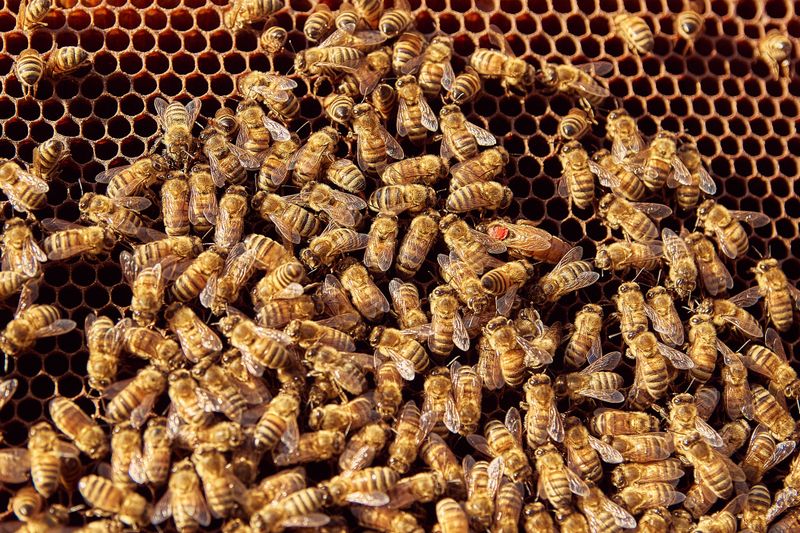
Where to Look: Effective Search Strategy
- Start with brood frames: Remove a frame from the center of the brood nest — this is where she spends most of her time. Look at the entire face in good light before flipping.
- Hold the frame at eye level: The queen's size and movement are most visible at eye level, not looking down at the frame.
- Scan in stripes: Let your eyes move across the frame systematically rather than searching randomly
- Look for movement disruption: Workers will often part around the queen as she moves — look for a moving "wake" in the bee mass
- Check frame edges and the bottom bar: Disturbed queens often move to the edge or bottom of the frame
- Work quickly but calmly: Excess smoke and rough handling cause the queen to hide on the inside frame surface — a calm inspection finds her faster
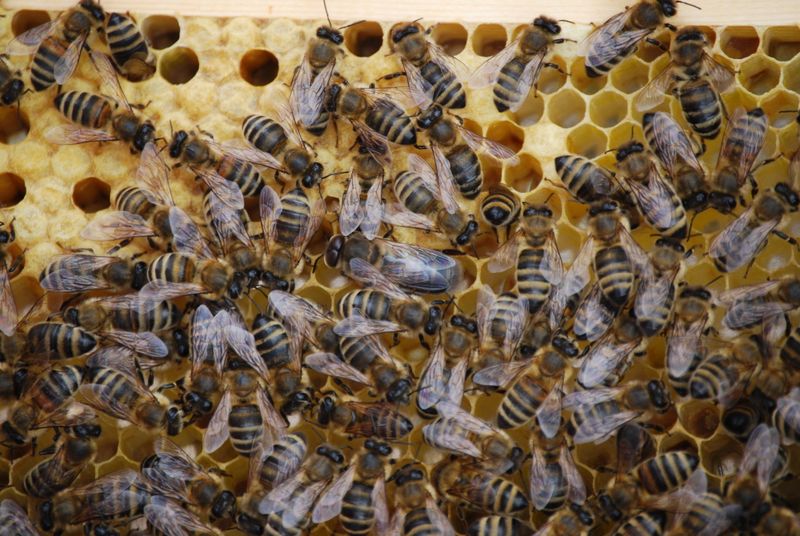
Marking Your Queen: Why and How
Marking the queen is one of the highest-value things a new beekeeper can do. A bright paint dot on the thorax (middle body section) makes her instantly visible even in a dense cluster of bees. The international color code:
| Year Ending In | Color |
|---|---|
| 1 or 6 | White |
| 2 or 7 | Yellow |
| 3 or 8 | Red |
| 4 or 9 | Green |
| 5 or 0 | Blue |
So a queen hatched in 2026 should be marked yellow. Use a Posca paint marker or Testors enamel model paint — both are non-toxic and dry quickly. To mark her, pick her up gently by the wings (index finger and thumb), or use a queen catcher tube, place a small dot on the thorax, and wait for it to dry before releasing her.
Check queen marking pen sets on Amazon
Indirect Signs of Queen Presence (When You Can't Find Her)
You don't always need to see the queen directly. These signs tell you she was present recently:
- Eggs (most reliable): Fresh eggs = queen present within 72 hours. Hold a frame of open brood at eye level toward the sun — eggs look like tiny white grains of rice standing upright in cells
- Young larvae: C-shaped larvae in cells in a consistent pattern = queen laying recently and consistently
- Colony temperament: A queenright colony is generally calm and purposeful. A queenless colony becomes agitated and may "roar" if you tap the hive side.
- No emergency queen cells: If bees aren't building emergency queen cells on brood frames, the colony likely considers itself queenright
The Penn State Extension honey bee queen management resources provide detailed guidance on queen biology, assessment, and management for all levels of beekeeper.
For the complete inspection process where you'll be searching for the queen, see our hive inspection guide. For splits and requeening context, see our hive splitting guide. Understanding queen development is also key to our varroa mite treatment guide.
Frequently Asked Questions
How do I identify the queen bee in a hive?
The queen is 20–30% longer than workers with an elongated abdomen, shorter wings relative to body length (wings don't reach the end of her abdomen), and more deliberate movement. She's surrounded by a "retinue" of workers facing toward her. In a busy frame, look for her continuous purposeful movement while workers tend cells around her.
What is the best way to find the queen during an inspection?
Start with the brood frames in the middle of the hive. Hold each frame at eye level in good light and scan systematically. The queen is usually found on frames with young open brood (eggs and young larvae) — she moves toward open cells to lay. Work calmly and quickly; disturbed queens hide on frame interiors.
Should I mark my queen?
Yes — marking the queen with a paint marker makes her dramatically easier to find in future inspections. Use the international queen marking color for her birth year: white (1/6), yellow (2/7), red (3/8), green (4/9), blue (5/0). Mark the thorax while holding her gently. Allow the paint to dry fully before releasing her.
What does it mean if I can't find the queen?
Inability to find the queen doesn't necessarily mean she's absent. Look for indirect signs: fresh eggs (tiny white grains standing upright in cells), young larvae, and calm colony demeanor. If you see eggs, the queen was present within 3 days. No eggs AND agitated bees may indicate a queenless hive requiring investigation.
Get weekly guides from HivemindGuide
No spam. Unsubscribe anytime.