Quick Answer
The most consequential beginner mistakes are ignoring varroa mites (single biggest cause of first-year colony loss), not keeping hive records (impossible to track problems), and harvesting first-year honey (leaves colony without winter stores). Most beginner colony losses are preventable with basic monitoring and a mentor.
Every experienced beekeeper has made these mistakes. Some lost colonies because of them. Rather than learn everything the hard way, here are the 10 most common errors new beekeepers make — with exactly what to do instead. Read these before your first season and revisit them mid-season. Many of these mistakes feel intuitive at the time but have consequences that don't show up until weeks or months later.
Mistake #1: Ignoring Varroa Mites
This is the #1 cause of first-year colony losses among new beekeepers. Varroa mites are invisible to casual inspection, and a colony can appear perfectly healthy while carrying a catastrophic mite load. By the time you see bees with deformed wings crawling at the entrance, the damage is done.
What to do instead: Conduct an alcohol wash mite count every 4–6 weeks during the active season (April–October). Treat when mite counts exceed 2 per 100 bees. See our complete varroa treatment guide for protocols. Buy an oxalic acid vaporizer and learn to use it. Every new package should be counted and treated as a baseline 30–45 days after installation. Varroa management isn't optional — it's beekeeping.
Mistake #2: Not Keeping Hive Records
After three inspections, your memories of "what I saw last time" become confused. Was there brood on frame 3 or frame 5? Was the population larger last visit or smaller? Without records, you can't track trends, and beekeeping is fundamentally about tracking trends.
What to do instead: After every inspection, write down: date, weather, frames with eggs/brood, food store estimate, varroa count if done, and any concerns. Review your last 3 inspection records before opening the hive — you'll approach it with context instead of guessing.
Mistake #3: Inspecting Too Infrequently (or Too Frequently)
New beekeepers often fall into one of two traps: either they're nervous and avoid inspecting, letting problems develop undetected, or they're excited and open the hive every day to "check," which stresses the colony constantly.
What to do instead: Inspect every 7–10 days during your first year's active season. Our hive inspection guide walks you through the full process. This frequency catches swarming preparations, queen problems, or disease before they become crises, without constantly disrupting the colony. After your first season, reduce to every 2–3 weeks for established hives.
Mistake #4: Not Using Enough Smoke (or Using It Wrong)
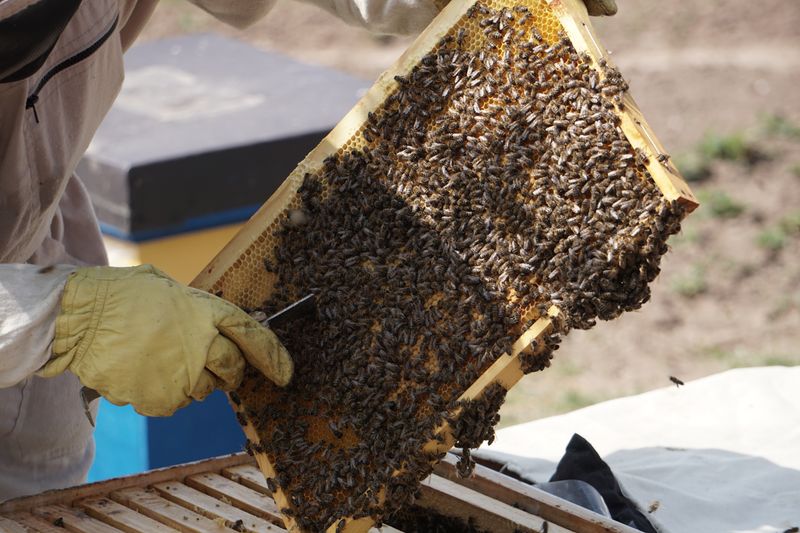
Using too little smoke — or using hot, gray smoke instead of cool, white smoke — makes inspections more aggressive. Many beginners puff once at the entrance and consider it done.
What to do instead: Smoke the entrance and wait 60 seconds before opening. Puff smoke across the tops of frames when you remove the inner cover. Throughout the inspection, puff smoke whenever bees start lifting toward you in an alert posture. Make sure your smoker is producing cool, white smoke.
Mistake #5: Harvesting Honey in the First Year
Honey is the goal — everyone gets into beekeeping partly for the honey. But a first-year colony installed from a package in April is just building up its population and stores. Taking honey from a colony that hasn't yet met its winter reserves guarantees starvation losses before spring.
What to do instead: Set a rule for yourself: no honey harvest unless the brood boxes are full AND there are fully capped supers on top. See our first honey harvest guide when the time comes AND you've checked that winter stores are sufficient for your region. When in doubt, leave it. Your second-year hive will produce significantly more honey anyway.
Mistake #6: Not Getting a Mentor
Books, YouTube, and guides like this one give you excellent information — but they can't look at your specific frames and say "that brood pattern is showing early signs of European Foulbrood" or "your queen is failing and you have 10 days to requeen before this colony is queenless."
What to do instead: Join your local beekeeping association. Attend their meetings. Ask an experienced member to do a hive inspection with you once per season, especially in year one. The American Beekeeping Federation has a member association directory at abfnet.org. This one step prevents more first-year colony losses than anything else.
Mistake #7: Adding Supers Too Late
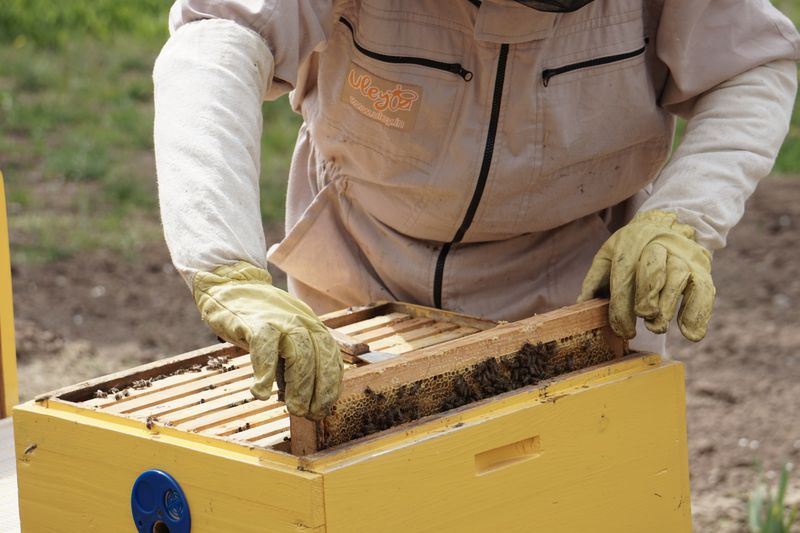
The instinct is to wait until you're sure the hive needs more space. But by the time a hive is completely packed and the bees have nowhere to go, they've already begun swarm preparations — queen cells may already be built. A swarm suddenly reduces the colony to 50–60% of its population.
What to do instead: Add a super when 7 of 10 frames in the top box are drawn and occupied — not when all 10 are packed. In peak spring season, this may mean adding supers every 2–3 weeks for strong hives.
Mistake #8: Incorrectly Diagnosing Disease
Seeing dead or unusual-looking larvae and assuming disease is normal is dangerous. American Foulbrood (AFB) is a federally regulated disease — misidentifying it (or missing it) leads to spreading it to neighbor hives through shared equipment.
What to do instead: Learn the ropiness test for AFB (twist a matchstick in a suspicious cell — AFB creates a stretchy brown rope; chalkbrood and sacbrood do not). Take photos of anything unusual and share with your local apiarist or beekeeping association.
Mistake #9: Feeding the Wrong Thing at the Wrong Time
Sugar syrup is sometimes necessary — for new packages, colonies with low spring stores, or periods of nectar dearth. But feeding sugar syrup when honey supers are on the hive results in bees storing sugar syrup in the super alongside nectar, contaminating your honey.
What to do instead: Feed 1:1 sugar syrup (by weight) in spring to new packages or light hives. Feed 2:1 syrup in fall to boost winter stores. Never feed when supers are on the hive. Only feed pollen substitute in early spring before natural pollen is available.
Mistake #10: Buying Cheap Equipment That Creates Problems
The $50 starter kit on Amazon with 10 frames, a hive body, a suit, and a smoker all in one box might seem like a deal. Poorly sized frames that don't fit standard supers, veils with gap-prone zippers, and smokers that won't stay lit create problems that make beekeeping harder, not easier.
What to do instead: Buy from established beekeeping supply companies — Mann Lake, Dadant, BetterBee, Brushy Mountain, or your local regional supplier. Frames should be standard Langstroth dimensions. Spend the extra $20 on a quality smoker (Weaver Leather smoker, $35–45) that actually stays lit. Cheap equipment false-saves money — the colony loss it enables costs far more than the difference.
Recommended Products
Frequently Asked Questions
What is the most common beginner beekeeping mistake?
The most common beginner mistake is not monitoring or treating for varroa mites. New beekeepers often assume healthy-looking bees are healthy bees. By the time varroa symptoms are visible (bees with deformed wings, declining population), the mite load is already catastrophic. Conduct an alcohol wash mite count every 4–6 weeks and treat when mites exceed 2 per 100 bees.
How do I know if I'm doing beekeeping right as a beginner?
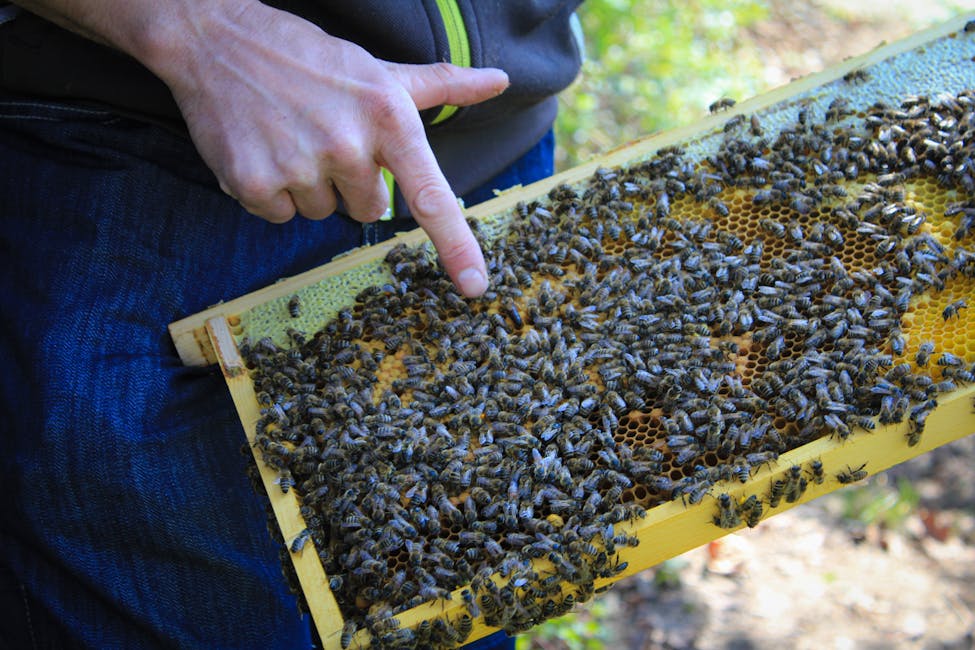
Signs of a well-managed hive: consistent egg-laying pattern, adequate food stores at all times, mite counts below 2% on monthly tests, bees returning with pollen, and the colony expanding appropriately through the season. Join a local beekeeping association — having an experienced mentor look at your hive once or twice per season is invaluable.
Do bees need to be fed in summer?
Established colonies with adequate forage generally don't need feeding in summer. However, new colonies may need supplemental feeding until they build up. Also feed during nectar dearth periods (late summer in many regions) if your hive is light on stores. Never feed when supers are on the hive — bees may store sugar syrup in the honey super.
How do I prevent my bees from swarming?
Prevention: ensure the hive always has space (add a super before they need it); conduct regular inspections in spring to identify and remove queen cells before they're capped; consider splitting strong hives in late spring to relieve swarm pressure. Swarming is a sign of a healthy, strong colony — don't punish it, manage it.
Why are my bees so aggressive during inspections?
Bees become defensive due to bad weather, being inspected in the evening, running out of smoke, or a naturally defensive queen. Requeen with a gentle stock queen if defensiveness is severe. For minor defensiveness, improve your smoke technique and inspect only in optimal conditions (warm, sunny day, 10 AM–2 PM).
Get weekly guides from HivemindGuide
No spam. Unsubscribe anytime.