Quick Answer
Harvest honey when 80%+ of cells are capped with white wax, typically mid-to-late summer after the main nectar flow. Remove bees using a bee brush or escape board, uncap the wax, extract by spinning or crush-and-strain, filter, and bottle. Most first-year hives shouldn't be harvested at all — leave stores for the colony to survive winter.
Harvesting your first honey is one of beekeeping's most rewarding milestones. But it's also one of the areas where beginners make the most consequential mistakes — harvesting too early (unripe honey ferments), harvesting too much (colony starves over winter), or choosing a method that damages comb unnecessarily. This guide walks you through the complete process with the decisions you need to make at each step.
Should You Harvest in Your First Year?
The honest answer for most beginners: probably not. A new colony needs 60–80 lbs of honey stored to survive a typical North American winter. A first-year colony installed from a 3-lb package in spring may have just barely enough stores to survive. Taking honey from a colony that needs it causes stress, winter starvation, and often colony loss.
How to assess: lift the back of your hive in late summer. A hive full of honey stores feels very heavy — a well-stocked colony has 60–80 lbs just in honey, which is significant. If the hive feels light or moderate, don't harvest. Ask your local beekeeping association's mentors to assess your specific colony before harvesting if you're unsure.
How to Tell If Honey Is Ready to Harvest
The 80% Rule
At least 80% of cells in a super frame should be capped with white wax before harvesting. Capped honey has been dehydrated by fanning bees to below 18.6% moisture — at this level it's shelf-stable and won't ferment.
The Shake Test
Hold a frame horizontally over the hive and shake it firmly. If nectar (uncured honey) drips out, the moisture content is still too high — leave it for the bees. If no liquid comes out, the honey is at or near correct moisture even if uncapped.
The Refractometer Test (Most Accurate)
A honey refractometer ($20–30) measures moisture percentage directly. Below 18.5% moisture: ready to harvest. Above 18.5%: risk of fermentation, leave for bees to continue curing.
Step 1: Remove Bees from Supers
Method 1: Bee Brush (Easiest for Beginners)
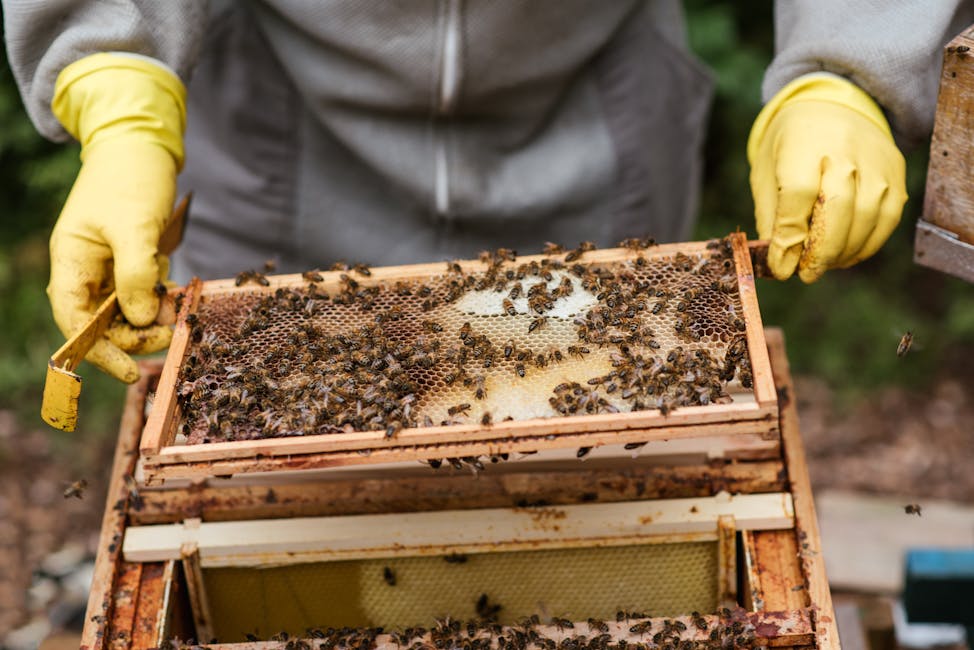
Use a soft natural bristle bee brush ($8–12) to gently sweep bees off each frame, one frame at a time. Place bee-free frames into a sealed box to prevent robbing. Simple and requires no extra equipment, but slow for large harvests and bees become agitated — use smoke generously.
Method 2: Bee Escape Board (Best Method)
A bee escape board with a one-way exit allows bees to leave the super below it but not return. Place the escape board between the super and the brood box 24–48 hours before harvest. When you return to harvest, the super will be mostly or completely empty of bees. The least disruptive method — no bees are harmed, no angry colony response.
Method 3: Fume Board
A fume board ($15–20) treated with Bee Quick ($8–15) drives bees down in 10–15 minutes on a warm day. Works for quick same-day harvest when you don't have 24 hours for an escape board.
Step 2: Uncapping the Honey
Remove the wax cappings that seal the honey cells:
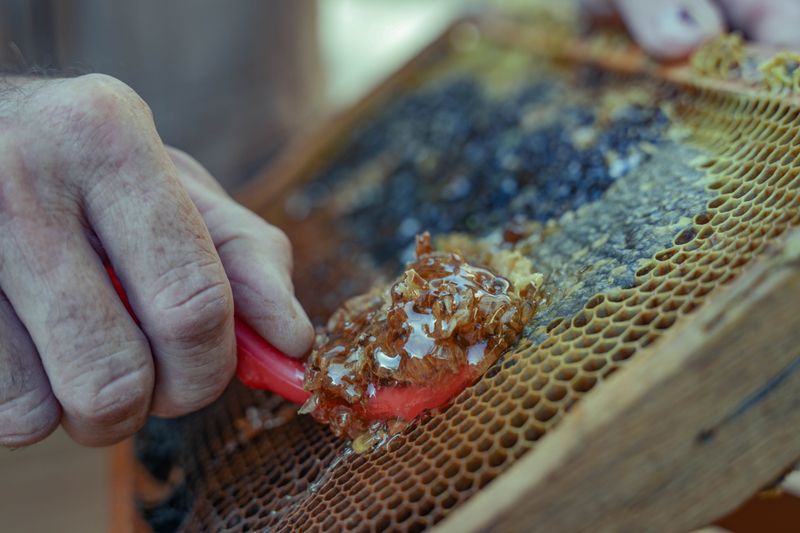
- Capping fork ($15–20): A plastic or stainless fork that scratches/perforates the cappings. Easy to use, inexpensive. Best for beginners.
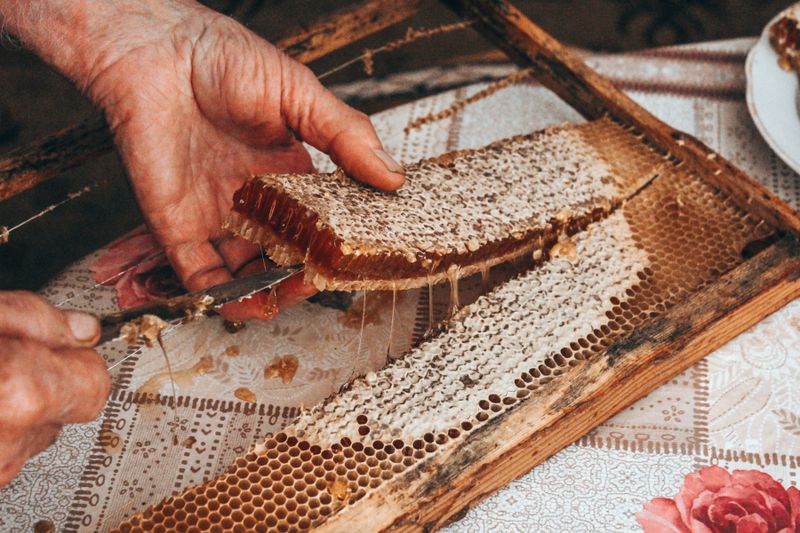
- Serrated uncapping knife ($20–35): Slices cappings off the frame in a single motion. Faster for large harvests.
- Crushing (for crush-and-strain method): Skip the uncapping step and crush the entire comb.
Step 3: Extract the Honey
Option A: Crush-and-Strain (Free, No Extractor Needed)
Scrape comb off the frame into a large bowl or bucket. Use a potato masher or clean hands to crush the comb completely. Pour into a mesh bag ($8–12) suspended over a 5-gallon bucket. Let gravity pull the honey through for 24–48 hours at room temperature. This method destroys the comb — bees must redraw it next season — but requires no equipment investment. Best for first harvests where you have just a few frames.
Option B: Honey Extractor (Preserves Comb)
A honey extractor spins frames centrifugally, flinging honey out of the cells without destroying the comb. The intact comb is returned to the hive, and bees refill it quickly — this is the production method for serious beekeepers.
- 2-frame tangential extractor (Goodland Bee Supply, $90–120): Entry-level, good for 1–3 hives
- 4-frame radial extractor ($150–250): Extracts both sides simultaneously, better for 3–6 hives
- See our guide on how much honey a hive produces to set realistic expectations. Renting from a local association: Many beekeeping clubs offer extractors to members for a small fee — excellent option for first harvest
Step 4: Filter and Bottle
After extraction, honey contains wax particles and air bubbles. Let it settle in a food-grade bucket for 24–48 hours — wax floats to the top and can be skimmed off. For filtering, pour through a 200–400 micron stainless filter ($15–20) into your bottling bucket. Don't use very fine filters — these remove beneficial pollen and clog quickly. Bottle into clean glass jars (Mason jars work perfectly). Before your first harvest, also review our hive inspection guide to verify winter stores are sufficient. Label with harvest date and floral source if known. Honey processed below 18.5% moisture is shelf-stable for years.
Recommended Products
Frequently Asked Questions
When can I harvest honey for the first time?
Most first-year hives should NOT be harvested. A new colony needs to build up enough honey stores (60–80 lbs) to survive winter without your intervention. If your hive is exceptionally strong and has more than two full supers of capped honey above strong brood boxes, you might carefully take one super late in the season.
How do I know when honey is ready to harvest?
Honey is ready to harvest when 80% or more of the cells in a frame are capped with white wax. The refractometer test is definitive: use a honey refractometer ($20–30) to test uncapped honey. Below 18.5% moisture is ready to harvest; above 18.5% risks fermentation.
What equipment do I need to extract honey at home?
Basic home extraction requires: a capping fork or uncapping knife ($15–25), a honey extractor ($90–300 for 2–4 frame models), a strainer/filter ($15–20), and a bottling bucket with a gate valve ($25–35). For first-time beekeepers with limited supers, a crush-and-strain method (no extractor needed) is free and works fine for small harvests.
How much honey can a beginner beekeeper expect to harvest?
First-year hives typically produce 0–30 lbs of harvestable honey, if any. Second-year hives in a good location produce 40–80 lbs. Yield varies enormously by region, weather, and colony strength — don't be disappointed if your first year produces nothing harvestable. Building a strong colony for year two is the goal.
How do I get bees off honey frames before harvesting?
The most common methods: use a bee brush to sweep bees off each frame; use a bee escape board (placed below the super 24–48 hours before harvest — allows bees down but not back up, emptying the super); or use Bee Quick fume boards. The bee brush is free and works well for small harvests; an escape board is the least disruptive method.
Get weekly guides from HivemindGuide
No spam. Unsubscribe anytime.