Quick Answer
A healthy established hive produces 30–100 lbs of honey per year, with 50–80 lbs being typical in good conditions. First-year hives rarely produce surplus — expect 0–15 lbs. Yield depends on forage availability, colony strength, local weather, and varroa management. Exceptional hives in ideal forage can produce 100–150 lbs.
A healthy, established beehive produces 30-100lbs of honey annually, with 50-80lbs being typical in good conditions. First-year hives often produce little to no surplus honey as they build population. Exceptional hives in ideal locations can produce 100-150lbs. Here's what affects honey yield and realistic expectations for backyard beekeepers.
Typical Honey Yields: What Backyard Beekeepers Actually Get
Based on surveys of hobby beekeepers across North America:
- First-year hives: 0-30lbs (often none harvested)
- Established hives (year 2+): 30-80lbs
- Above average: 80-120lbs (good location, strong colony)
- Exceptional: 120-150lbs (ideal conditions, multiple nectar flows)
- Commercial averages: 60-100lbs per hive (but they manage hundreds)
Reality check: The average backyard beekeeper with 2-5 hives harvests 100-300lbs total annually. Weather, location, and management cause significant year-to-year variation.
What Affects Honey Production? The 6 Key Factors
1. Local Forage Availability
Bees need diverse nectar sources within 3km (2 miles). Urban/suburban areas often outperform rural due to gardens providing continuous bloom. Key honey plants: clover, black locust, linden, goldenrod, fruit trees. Learn more about honey production from the National Honey Board.
2. Weather Conditions
Rain at bloom time washes away nectar. Drought reduces nectar production. Ideal: warm (20-30°C/68-86°F), sunny days with occasional rain. Cold/wet springs delay nectar flows.
3. Hive Strength (Population)
A strong colony has 50,000-60,000 bees at peak season. Weak colonies (<30,000) can't exploit nectar flows fully. Population builds through spring — that's why first-year hives produce less.
4. Beekeeper Management
Proper varroa control, timely super addition, preventing swarms, and not over-harvesting all affect yield. Inexperienced beekeepers often harvest 30-50% less than experienced ones with identical locations.
5. Hive Location
Morning sun, wind protection, and proximity to water matter. South-facing locations with windbreaks produce more than shaded, exposed sites.
6. Bee Genetics
Some bee strains are more prolific foragers. Italian bees are known for good honey production. Local survivor stock may be better adapted but not necessarily highest producers.
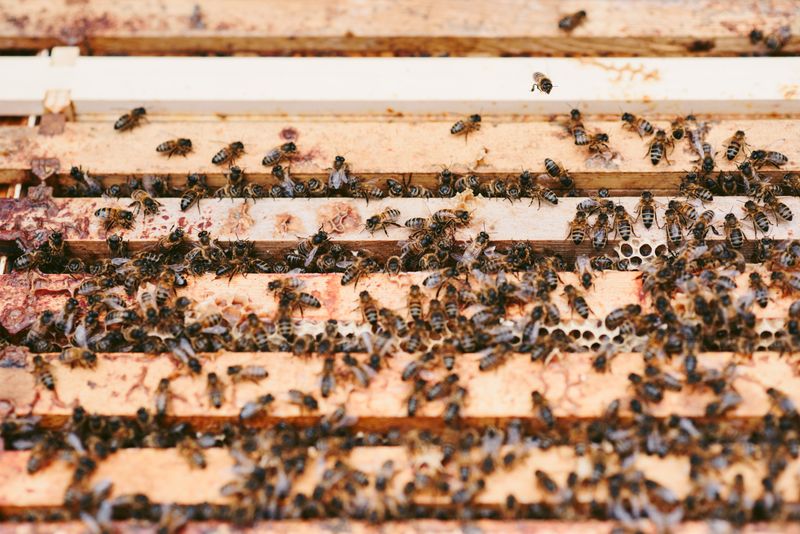
First Year vs Established Hives: Why the Difference Matters
First-Year Hive Reality
A package or nuc starts with 10,000-20,000 bees. They need to:
- Draw out foundation into usable comb (beeswax production consumes honey)
- Build population to 50,000+
- Store 60-80lbs for winter (in cold climates)
Result: Most first-year hives have little to no surplus honey. Taking honey risks winter starvation.
Established Hive (Year 2+) Advantage
An overwintered colony starts spring with:
- 20,000-30,000 bees (vs 10,000 from a package)
- Already drawn comb (no wax building needed)
- Established queen and foraging patterns
Result: They hit nectar flows at full strength and can produce surplus from the start.
Seasonal Honey Production Timeline
Honey isn't produced evenly throughout the year. Key nectar flows by region:
Northeast & Midwest
- Spring (May): Dandelion, fruit trees, maple — light honey
- Early Summer (June): Clover, black locust — main flow
- Late Summer (Aug-Sept): Goldenrod, aster — dark, strong honey
Southeast
- Spring (March-April): Tulip poplar, citrus, clover
- Summer (June-July): Sourwood, sumac
- Fall (Sept-Oct): Goldenrod, Spanish needle
West Coast
- Spring (April-May): Fruit trees, mustard, eucalyptus
- Summer (June-July): Sage, buckwheat, star thistle
- Late Summer (Aug): Fireweed, knapweed
Peak production: 70-80% of annual honey comes during the main flow (typically 3-6 weeks in early summer).
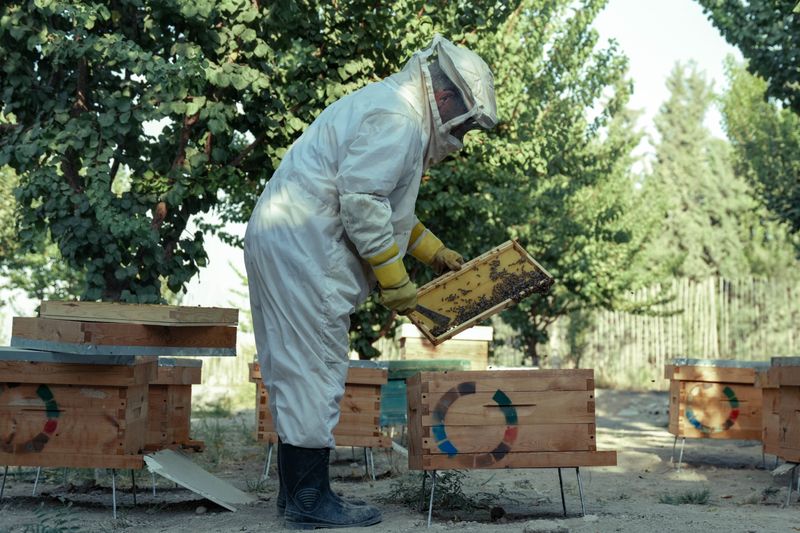
How Much Honey to Leave for Winter
Bees need honey to survive winter. How much depends on climate:
- Cold climates (Canada, northern US): 60-80lbs per hive
- Moderate climates (Mid-Atlantic, Midwest): 40-60lbs
- Mild climates (Southeast, West Coast): 30-50lbs
- Warm climates (Florida, Gulf Coast): 20-40lbs (bees forage year-round)
Rule of thumb: Leave 2 full deep boxes or equivalent. Only harvest surplus above winter needs. Taking too much = feeding sugar syrup all winter or dead colony.
Converting Pounds to Jars: What Your Harvest Actually Yields
Honey is heavy. Here's what those numbers mean in jars:
| Honey Harvest | Pint Jars (12oz) | Quart Jars (24oz) | Half-Pint Jars (8oz) |
|---|---|---|---|
| 30lbs (minimal) | 20-24 jars | 10-12 jars | 30-36 jars |
| 50lbs (typical) | 33-40 jars | 16-20 jars | 50-60 jars |
| 80lbs (good year) | 53-64 jars | 26-32 jars | 80-96 jars |
| 100lbs (exceptional) | 66-80 jars | 33-40 jars | 100-120 jars |
Note: These are net yields after accounting for winter stores left for bees.
Increasing Your Hive's Honey Production
- Choose location carefully: Maximum sun, wind protection, diverse forage within 3km.
- Manage varroa aggressively: Weak colonies from mite damage produce less.
- Add supers timely: Give bees space before they need it to prevent swarming.
- Use foundationless or thin foundation: Bees draw comb faster with less wax production.
- Consider multiple hives: 2-3 hives increase chances at least one has a good year.
- Keep records: Note what works each year to improve management. See how to harvest honey for the first time.
Recommended Products
Frequently Asked Questions
How much honey does one beehive produce per year?
A healthy, established hive produces 30-100lbs of honey annually, with 50-80lbs being typical in good conditions. First-year hives often produce little to no surplus honey as they build population and stores. Exceptional hives in ideal locations can produce 100-150lbs.
What factors affect how much honey a hive produces?
Key factors include: local forage availability, weather conditions, hive strength (population), beekeeper management, varroa mite levels, and hive location. Urban hives often outperform rural ones due to diverse, year-round flowering plants in gardens.
How much honey does a first-year hive produce?
Most first-year hives produce 0-30lbs of surplus honey. The colony needs its first season to build population (from 10,000 to 50,000+ bees) and draw out comb. Taking honey from a first-year hive risks winter starvation — most beekeepers leave all honey for the bees in year one.
When during the year is honey produced?
Honey production peaks during nectar flows: spring (fruit tree bloom, dandelions), early summer (clover, black locust), and late summer (goldenrod, aster). In most regions, 70-80% of honey is produced May-July. Some regions have fall flows (September) from goldenrod and aster.
How many jars of honey does one hive produce?
A typical 50lb harvest yields 33-40 pint jars (12oz each) or 16-20 quart jars (24oz each). A 100lb exceptional harvest yields 66-80 pint jars or 33-40 quart jars. Remember that bees need 60-80lbs to survive winter in cold climates, so only surplus above that is harvested.
Get weekly guides from HivemindGuide
No spam. Unsubscribe anytime.