Quick Answer
The best beginner beehive kit is the Mann Lake HD-110 (~$250–300) — pre-assembled, quality pine, complete with smoker, veil, and hive tool. Budget option: Hoover Hives (~$150–180). Premium: Flow Hive 2+ ($700–900). All beginner kits should use the Langstroth hive system — it's the industry standard with the most community support. Budget $340–740 total for year one including bees and supplies.
Starting your first hive is one of the most rewarding decisions a backyard hobbyist can make. But the equipment decisions you make upfront determine whether year one is exciting or frustrating. We reviewed the most popular starter kits — here's what's actually worth buying.
What Should You Look for in a Beginner Beehive Kit?
A good starter kit should include everything you need to get a colony established without requiring immediate upgrades. The non-negotiables: a complete hive body (bottom board, brood box, frames, foundation, inner cover, outer cover), a veil or full suit, a smoker, and a hive tool. Anything less and you're buying piecemeal before your first season is over.
Hive type matters too. The Langstroth is the industry standard — universally compatible parts, widely available, and the easiest to find local support for. Flow Hives are a premium option with the honey-on-tap mechanism, but they're 3-4x the cost. For most beginners, start Langstroth.
Best Overall: Mann Lake HD-110 Complete Starter Kit
Mann Lake is the largest beekeeping supplier in North America, and their HD-110 kit reflects that depth of experience. You get a full 10-frame Langstroth setup: assembled and painted hive bodies, plastic foundation frames, bottom board, inner and outer cover, plus a veil, smoker, and hive tool. Everything ships ready to use.
What separates this from cheaper kits is the quality of the wood — solid pine, pre-assembled, with a clean paint coat that holds up through multiple seasons. The smoker is a real bellows smoker, not a flimsy toy. At around $250-300, it's not the cheapest option, but it's the kit you'll still be using in year five.
Check Price on Amazon (Mann Lake Kit) →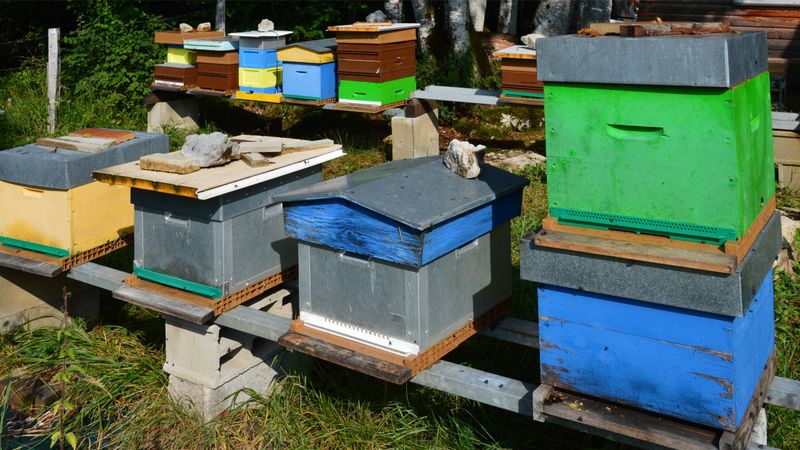
Best Budget: Hoover Hives 10-Frame Langstroth Kit
If budget is the primary constraint, Hoover Hives delivers solid value in the $150-180 range. The kit includes a complete hive setup with unassembled boxes (assembly required but straightforward), wax-coated foundation, and basic protective gear. The wood quality is a step below Mann Lake but entirely functional for a first hive.
The main tradeoff is assembly time — plan for an afternoon — and the veil is the basic hood style rather than a full suit. Worth the savings if you're in a climate where full suits aren't essential or you already have a suit from elsewhere.
Check Price on Amazon →Best Premium: Flow Hive 2+ Complete Kit
The Flow Hive changed the perception of beekeeping when it launched, and the 2+ refines the concept. The harvesting mechanism — turn a key, honey flows directly into your jar — is genuinely innovative and makes honey extraction accessible without expensive extractors. The cedar construction is premium and long-lasting.
At $700-900 for the full kit, it's a significant investment. It makes the most sense for hobbyists who want low-intervention beekeeping and are willing to pay for the convenience. One note: Flow Hive still requires all the standard colony management skills — it only simplifies extraction, not beekeeping itself.
Check Price on Amazon (Flow Hive) →
What Essential Add-Ons Do You Need for Your First Year?
- Bee package or nucleus colony (nuc): Your kit doesn't come with bees. Order a 3lb package or a 5-frame nuc from a local supplier. Nucs are preferable — already established with a laying queen.
- Entrance reducer: Helps a new colony defend itself while population builds. Usually included in full kits, but worth confirming.
- Queen excluder: Keeps the queen in the brood box once you add honey supers. Essential for clean honey production.
- Mite treatment: Varroa mites are the #1 killer of managed colonies. Have EPA-approved treatments like oxalic acid or Apivar strips on hand before your first fall.
Bottom Line
For most beginners, the Mann Lake HD-110 is the right call — complete, durable, and backed by the largest supplier in the industry. If you're budget-constrained, Hoover Hives gets you started without breaking the bank. If you've already decided you're serious about this as a long-term hobby and want the easiest possible honey harvest, invest in the Flow Hive 2+.
Whatever you choose, get your hive set up before you order bees. April and May are prime installation months across most of North America — don't be scrambling to assemble boxes when your package arrives.
Frequently Asked Questions
What should I look for in a beginner beehive starter kit?
A good starter kit should include a complete hive body (bottom board, brood box, frames, foundation, inner cover, outer cover), a veil or full suit, a smoker, and a hive tool. The Langstroth hive is the industry standard and recommended for beginners due to universal compatibility and available support.
What is the best beehive starter kit for beginners?
The Mann Lake HD-110 Complete Starter Kit is our top recommendation for beginners. It includes a full 10-frame Langstroth setup with assembled and painted hive bodies, plastic foundation frames, bottom board, inner and outer cover, plus a veil, smoker, and hive tool. The quality wood and durable construction make it a kit you'll use for years.
How much does a beehive starter kit cost?
Beehive starter kits range from $150-300 for basic Langstroth setups to $700-900 for premium Flow Hive kits. The Mann Lake HD-110 kit costs $250-300, while budget options like Hoover Hives cost $150-180. Remember to budget an additional $150-250 for bees (package or nuc).
Is a Flow Hive worth the extra cost for beginners?
The Flow Hive 2+ is a premium option ($700-900) that simplifies honey extraction with its honey-on-tap mechanism. While innovative, it only simplifies extraction, not colony management. For beginners on a budget, a standard Langstroth kit is recommended. The Flow Hive makes sense for serious hobbyists willing to invest in convenience.
What essential add-ons do I need for my first beekeeping year?
Essential add-ons include: bee package or nucleus colony (nuc), entrance reducer, queen excluder, and varroa mite treatment (oxalic acid or Apivar strips). Varroa mites are the #1 killer of managed colonies, so having treatment on hand before your first fall is critical for colony survival.
Get weekly guides from HivemindGuide
No spam. Unsubscribe anytime.