Quick Answer
Varroa destructor is the single greatest threat to honey bee colonies worldwide. Treat when mite counts exceed 2 per 100 bees (alcohol wash method). Best treatments: Oxalic acid vapor for broodless colonies (organic-approved, 93–97% kill rate); Apivar strips for colonies with brood (90–95% effective, $20–30); Formic Pro for organic brood-season treatment ($25–40).
Varroa mites (Varroa destructor) are a parasitic mite species that parasitizes Apis mellifera (Western honey bee). Without treatment, most untreated colonies in North America and Europe collapse from varroa-associated viral diseases within 1–3 years. Understanding and managing varroa is non-negotiable for beekeepers. See our common beekeeping mistakes guide for context on why beginners often miss this.
Why Is Varroa So Dangerous?
USDA research confirms varroa mites feed on bee fat bodies — the energy storage organ critical for immune function, winter survival, and brood feeding. Varroa-fed bees are nutritionally depleted, have weakened immune systems, and have shorter lifespans. Worse, varroa is a vector for Deformed Wing Virus (DWV), which causes bees to emerge with shriveled, useless wings. A heavily mite-infested colony produces thousands of DWV-infected bees that can't fly, creating a cascading population collapse. By the time visible symptoms appear, the mite load is typically already catastrophic.
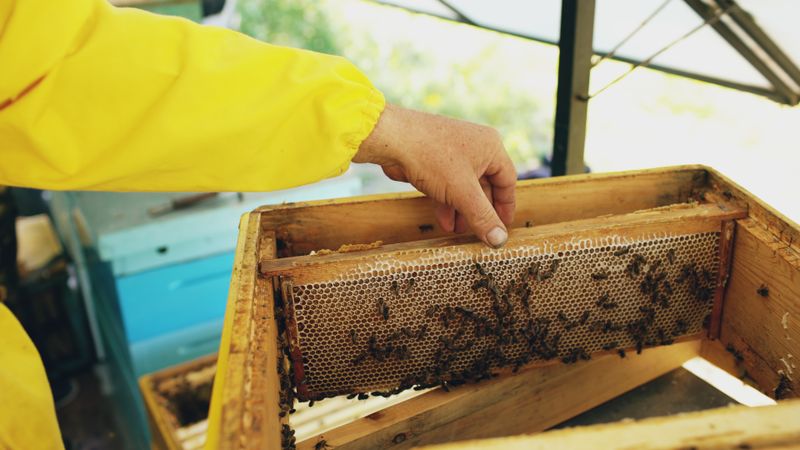
How to Count Varroa Mites (Alcohol Wash Method)
- Find a brood frame with nurse bees actively attending brood.
- Shake or brush approximately 300 bees (½ cup) into a jar.
- Add enough rubbing alcohol to cover the bees.
- Secure a mesh lid and shake vigorously for 60 seconds — the alcohol dislodges mites from bees.
- Pour liquid through the mesh into a white bowl. Count the reddish-brown dots — these are varroa mites.
- Calculate: number of mites ÷ 3 = mites per 100 bees. (VT Extension printable instructions)
Treatment Thresholds
| Mites per 100 Bees | Status | Action |
|---|---|---|
| 0–1 | Low — healthy colony | Monitor monthly, no treatment needed |
| 2–3 | Warning threshold | Treat immediately — mite population doubles every 15–30 days |
| 4+ | Critical | Emergency treatment — colony may already have significant viral load |
| 6+ | Collapse risk | Treat aggressively, assess whether colony is salvageable |
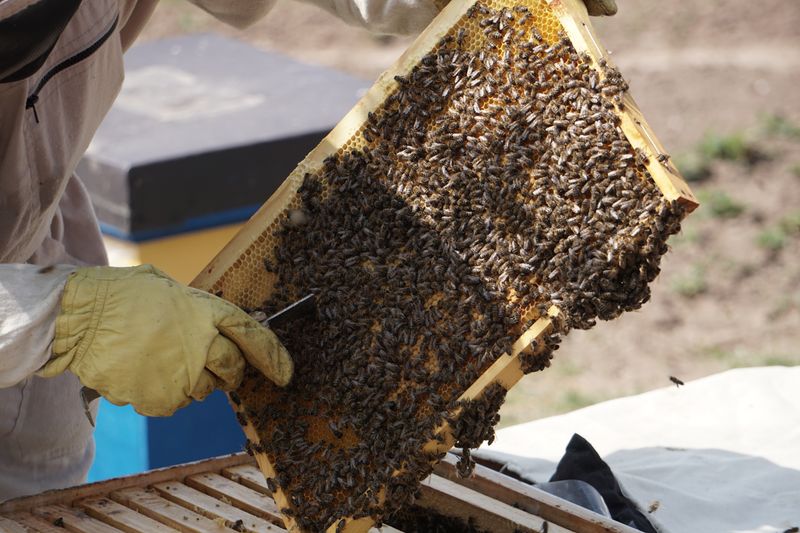
Varroa Treatment Options
Use the HBHC Treatment Decision Tool to choose the right treatment based on your region, season, and brood status.
Treatment 1: Oxalic Acid Vaporization (Best for Broodless Colonies)
Brand: Api-Bioxal (only EPA-registered form for US use) | Price: $25–35 for a 35g packet; vaporizer $130–200 | Effectiveness: 93–97% kill rate on phoretic mites
Oxalic acid vapor penetrates throughout the hive and kills mites on adult bees. It does NOT penetrate capped brood. During broodless periods: a single treatment kills 93–97% of mites. During active brood season: treat every 5 days for 3 treatments to catch mites emerging from capped cells. Safety critical: Use a P100 respirator and full protective gear. Oxalic acid vapor is a severe respiratory irritant — no exceptions.
Varrox Oxalic Acid Vaporizer
Most reliable OA vaporizer | 2.5 min treatment | Compatible with Api-Bioxal | Essential varroa management tool
$130–200
Check Price on Amazon →
Treatment 2: Apivar Strips (Amitraz) — Most Effective with Brood
Price: $20–30 for 10 strips (treats 5 hives) | Treatment period: 6–8 weeks | Effectiveness: 90–95% including mites in capped brood
Apivar strips are hung inside the hive, 2 per brood box, and remain for 6–8 weeks. Amitraz slowly fumigates through the brood nest and is highly effective. Do not use during a honey flow or within 6 weeks of harvesting honey. Amitraz resistance is emerging in some regions — rotate treatment types to prevent resistance development. Penn State Extension has region-specific resistance data.
Apivar Varroa Treatment Strips
Amitraz-based | 90–95% effective with brood | 6–8 week treatment | 10 strips per pack (treats 5 hives)
$20–30
Check Price on Amazon →Treatment 3: Formic Pro / MAQS (Formic Acid) — Organic with Brood Penetration
Price: $25–40 per pack (2 pads) | Treatment period: 14–20 days | Effectiveness: 85–95% effective; penetrates capped brood
Formic acid is the only organic treatment that kills varroa inside capped brood cells — the preferred organic option during the brood season. Temperature constraints: formic acid releases too quickly above 85°F (risks queen loss) and too slowly below 50°F. Best used in temperatures of 50–85°F.
Formic Pro Varroa Treatment
Organic-approved | Penetrates capped brood | 14–20 day treatment | 2 pads per pack | Use 50–85°F only
$25–40
Check Price on Amazon →Treatment 4: Apiguard (Thymol) — Organic Summer Treatment
Price: $18–25 for 2 trays | Treatment period: 4 weeks | Effectiveness: 80–90%
Apiguard is an effective organic treatment suitable for summer use in temperatures above 59°F. The gel formulation sits on the top bars and releases thymol vapor through the hive. Like formic acid, it doesn't penetrate capped brood, so timing for broodless or low-brood conditions improves effectiveness.
The Annual Varroa Management Calendar
| Time of Year | Recommended Action |
|---|---|
| Spring (March–May) | Alcohol wash mite count after first brood cycle. Treat new packages 30–45 days post-installation. |
| Early Summer (June) | Monthly mite count. Treat if above 2% threshold. |
| Late Summer (August) | Critical treatment window — treat all colonies before winter bees are raised. Most important treatment of the year. |
| Fall (September–October) | Post-treatment mite count 2 weeks after treatment ends to verify efficacy. |
| Winter (November–February) | Optional OA vaporization during broodless window if fall counts were high. Start planning next season's hive installation timing. |
Frequently Asked Questions
What is the most effective varroa mite treatment?
Oxalic acid is the most effective and safest treatment for broodless conditions — killing up to 97% of phoretic mites. For colonies with brood, Apivar (amitraz strips) and Formic Pro (formic acid) are most effective because they penetrate capped brood. Rotating between treatment types prevents resistance development.
How do you check for varroa mites?
The alcohol wash is the gold standard (recommended by the Honey Bee Health Coalition): collect approximately 300 adult bees from the brood nest, add rubbing alcohol, shake 60 seconds, pour through mesh strainer, count mites. Divide mites by 3 to get mites per 100 bees. Above 2% (6 mites per 300 bees) requires immediate treatment.
When should you treat for varroa mites?
Treat when your varroa count exceeds 2 mites per 100 bees. Proactive timing: treat in late summer (August–September) before the winter bees are raised — these long-lived winter bees are critical for colony survival, and high mite loads during their development causes permanent damage. Also treat new packages 30–45 days after installation.
Can you treat varroa organically?
Yes — oxalic acid, formic acid (Formic Pro/MAQS), and thymol (Apiguard) are all organic compounds approved for use in certified organic beekeeping. Oxalic acid vaporization is particularly popular for organic beekeepers because it's highly effective, leaves no residue in wax or honey, and has minimal bee toxicity at correct doses.
How do you treat varroa with oxalic acid?
Oxalic acid vaporization: load a vaporizer (Varrox or ProVap) with 1 gram of Api-Bioxal crystals, seal the hive entrance, and sublimate for 2.5 minutes. For broodless colonies, a single treatment is highly effective. For colonies with brood, repeat every 5 days for 3+ treatments. Always wear a P100 respirator — oxalic acid vapor is hazardous to lungs.
Get weekly guides from HivemindGuide
No spam. Unsubscribe anytime.