
A well-designed pollinator garden is one of the highest-impact things a beekeeper can do for their colony's health and honey production. While bees forage up to 3 miles from the hive, having abundant forage close by reduces foraging energy expenditure and increases nectar collection efficiency. For non-beekeepers, a pollinator garden supports the native bee populations that perform 80% of food crop pollination in North America.
The Seasonal Bloom Calendar: Planning for Continuous Forage
The most important principle: no gap in bloom. A "dearth" period with nothing flowering forces bees to consume stored honey reserves and stresses the colony. Plan for at least 3–4 plant species blooming during each month of the active season (March–October in Zone 5–6).
| Season | Top Plants | Notes |
|---|---|---|
| Early Spring (Mar–Apr) | Willow, crocus, dandelion, maple, snowdrops | Critical for colony buildup — don't remove dandelions |
| Late Spring (May–Jun) | Apple/cherry/pear blossom, borage, clover, black locust | Primary nectar flow for many regions |
| Early Summer (Jun–Jul) | Lavender, phacelia, buckwheat, linden, monarda | Linden flows are exceptional when timed right |
| Mid-Summer (Jul–Aug) | Echinacea, sunflowers, cosmos, borage, sweet clover | Summer dearth risk in hot climates — plant late bloomers |
| Late Summer/Fall (Aug–Oct) | Goldenrod, asters, ivy, sedum | Critical for winter fat bees — don't skip these |
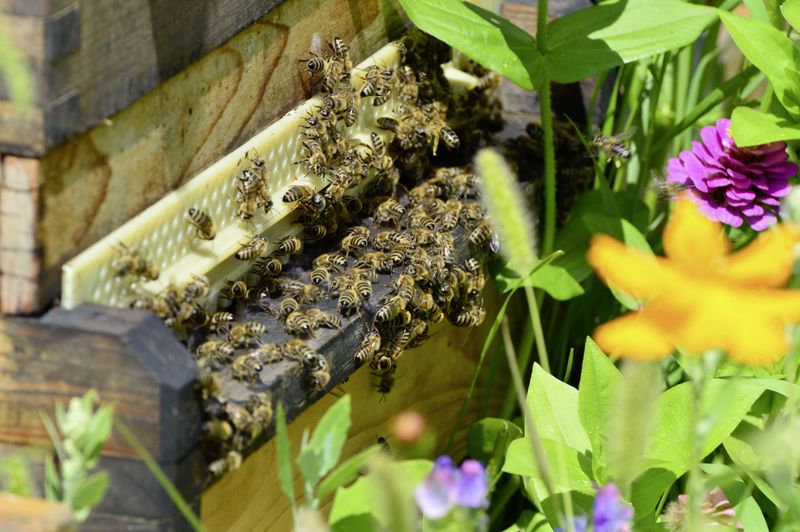
Top Nectar Plants for Honeybees
Borage (Borago officinalis)
Borage is one of the highest-nectar plants per flower in a temperate garden. The star-shaped blue flowers produce nectar continuously throughout summer, bees visit them constantly, and borage reseeds itself prolifically — plant it once and it returns every year. Easy to grow from seed, tolerates poor soil, and edible for humans too.
Phacelia (Phacelia tanacetifolia)
Phacelia is arguably the most bee-attractive annual you can plant — some estimates suggest 4x more bee visits per plant than lavender. It produces continuous purple flowers from early summer through fall, tolerates partial shade, and is easy to grow from seed. A 10-square-metre patch of phacelia visibly draws bees from across the neighbourhood.
Goldenrod (Solidago)
Goldenrod is the most important fall nectar plant in North America. It blooms in August–October when most other plants have finished, and bees use the nectar specifically to build "fat bees" — the long-lived winter bees critical for colony survival. A goldenrod-rich garden near your apiary dramatically improves winter colony strength. Native to North America, excellent wildlife habitat plant.
Buy goldenrod plants on Amazon
Lavender (Lavandula)
Lavender produces abundant nectar in mid-summer, tolerates drought and poor soil, and blooms for weeks. The fragrant oils are also said to mask alarm pheromone near the hive. English lavender (L. angustifolia) is hardier in northern gardens than French or Spanish varieties. Plant in well-drained, sunny spots.
Clover (Trifolium)
White clover (Trifolium repens) allowed to grow in lawns is arguably the highest-impact thing most homeowners can do for local bees. A clover lawn produces more nectar per square metre than almost any other ground cover. Consider overseeding sparse lawn areas with white clover seed in spring.
The USDA Forest Service pollinator plant guides provide region-specific plant recommendations for every part of North America, including native species lists by ecoregion.
Avoiding the Dandelion Mistake
Many homeowners spray or remove dandelions without realizing they are one of the most important early spring nectar sources for bees. In early spring when queens are laying rapidly to build colony population, dandelion pollen and nectar provide critical nutrition before other plants bloom. The Xerces Society's research on dandelions confirms their importance and recommends leaving dandelion patches in managed spaces.
For managing your beehives through the forage calendar described above, see our hive inspection guide for timing inspections with bloom periods, our spring beehive guide for capitalizing on early forage, and our honey production guide for how plant forage directly affects harvest yields.
Frequently Asked Questions
What is the best plant for honeybees?
For North American gardens, linden/basswood produces exceptional nectar volume. For herbaceous perennials: borage is excellent throughout summer. For critical early spring forage: dandelion, willow, and red maple. For diverse summer forage: lavender, phacelia, buckwheat, and echinacea. For fall fat-building: goldenrod and asters are irreplaceable.
What flowers should I avoid planting near beehives?
Avoid azalea/rhododendron (grayanotoxin risk in honey) and highly hybridized double-petaled flowers with little accessible nectar or pollen. Most common garden plants are safe and beneficial. Focus on planting more rather than avoiding specific plants unless you're in a region where specific toxic species are a documented risk.
How do I create a year-round bee forage garden?
For year-round forage in Zone 5–6: Early spring: crocuses, willow, dandelion. Late spring: fruit tree blossoms, clover, borage. Summer: lavender, echinacea, phacelia, buckwheat. Late summer/fall: goldenrod, aster, ivy. The key is ensuring no gap between bloom periods — goldenrod and asters are critical for fall fat-building before winter.
Should I plant native or non-native flowers for bees?
Both are valuable. Native plants are especially important for native bee species. Non-native plants like lavender, borage, and phacelia produce exceptional nectar quantities. A pollinator garden benefits from both: a native plant foundation for ecological function, supplemented with high-nectar non-natives for maximum foraging density.
Get weekly guides from HivemindGuide
No spam. Unsubscribe anytime.