
More hives die in winter than from any other cause in North American beekeeping. The majority of winter losses are preventable — and most are caused by two factors: varroa mite infestations that collapse the winter bee population, and inadequate honey stores. A beekeeper who addresses both of these in October loses very few hives.
The October Winterization Checklist
1. Varroa Treatment (Most Important)
Winter bee losses due to varroa are the leading cause of colony failure. In October/November, when the colony is at its minimum brood level (or broodless), an oxalic acid treatment via vaporizer or dribble is most effective:
- Oxalic acid vaporizer (OAV): Vaporize 1g of oxalic acid dihydrate per hive body — reaches bees in all crevices. Most effective when broodless (varroa in cells aren't exposed). Requires appropriate respirator PPE.
- Oxalic acid dribble: Dribble 5mL of 3.2% OA solution per seam of bees. Simpler, no specialized equipment needed.
- When to treat: When daytime temperatures are 5–15°C and the colony is broodless or nearly broodless — typically late October in Zone 5–6, early November in Zone 6–7.
For complete varroa treatment guidance, see our dedicated varroa mite treatment guide.
2. Check and Supplement Honey Stores
Heft the hive from behind — a heavy hive (feels difficult to lift from the back) is adequately stored. A light hive needs immediate feeding:
- Liquid syrup (2:1 sugar:water): Feed immediately in early October while temperatures allow. Bees can process liquid syrup down to about 10°C but it becomes more difficult below that.
- Fondant or candy board: For late-season feeding or mid-winter emergency feeding. Place directly on top of the frames over the cluster. Bees can access it even in deep cold.
3. Mouse Guards and Entrance Reducers
Install mouse guards (metal screens over the entrance) before mice start seeking shelter — typically by mid-October. Mice can destroy a winter cluster and contaminate combs in days. Also reduce the entrance to its smallest opening — a 1.5 cm opening is sufficient for winter ventilation and much easier for the cluster to defend.
4. Ventilation: The Counterintuitive Rule
Cold doesn't kill winter clusters — moisture does. A properly managed winter hive needs ventilation to allow moisture-laden air from the winter cluster to escape. The standard approach:
- Upper entrance or upper ventilation hole — allows warm moist air to exit
- Screened bottom board — provides bottom ventilation (can be partially closed in the coldest climates)
- DO NOT wrap the hive tightly in plastic with no ventilation — moisture accumulation leads to condensation dripping on the cluster, chilling bees
The University of Maryland Extension beekeeping winterization guide provides region-specific guidance for Eastern North American beekeeping conditions.
5. Windbreak
In exposed northern locations, a windbreak (hay bale, plywood panel, or natural vegetation) on the north and west sides of the hive reduces the wind-chill load on the colony. Not a substitute for other winterization steps, but meaningful in very exposed sites.
6. Optional: Insulation
In climates colder than -15°C (Zone 4 and colder), adding an insulated inner cover or foam board on top of the inner cover reduces heat loss through the top. Bees generate heat in the winter cluster — insulation above reduces how hard they work to maintain temperature, reducing honey consumption.
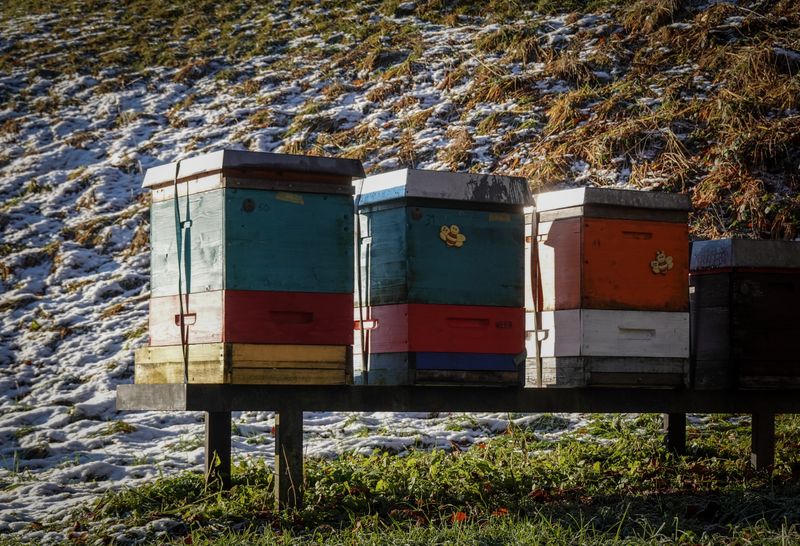
What to Check in Winter
After October winterization, leave the hive alone until late February. On a warm day above 7°C:
- Listen at the entrance — a healthy cluster hums. Silence may indicate problems.
- Knock on the side — surviving bees will respond with increased noise briefly.
- Look for dead bees in front of the entrance — some is normal. A pile without a cluster presence inside is a warning sign.
- In late February, when temperatures reach 10°C+, do a quick "peek" by briefly lifting the outer and inner cover — look for cluster position relative to honey frames above. If cluster is near the top with no honey above them, emergency feeding is needed immediately.
For comprehensive guidance on what happens when bees become active in spring, see our spring beehive guide, our hive inspection guide, and our beekeeping mistakes to avoid for common errors that cost hives.
Frequently Asked Questions
How much honey does a beehive need to survive winter?
In cold climates (most of Canada, USDA Zones 3–5), a colony needs 60–80 lbs of honey stores. In Zone 6–7 (milder climates), 40–60 lbs is usually sufficient. A hive light on stores in October should be fed 2:1 sugar syrup immediately to build reserves before temperatures drop below 10°C, when bees can no longer process liquid syrup.
Should you insulate a beehive for winter?
In climates with prolonged temperatures below -15°C (most of Canada, northern US), top insulation helps the colony conserve energy. Most effective: an insulated inner cover or insulation board on top of the hive. Avoid wrapping sides tightly in plastic — moisture accumulation is more dangerous than cold temperature in most beehive winter failures.
What is the number one cause of winter beehive losses?
Varroa mite infestation is the leading cause. Mite-damaged bees have shortened lifespans and impaired immune systems, causing winter population collapse. An oxalic acid treatment in November when broodless dramatically improves winter survival rates. Colonies that die in winter with adequate food stores almost always have high varroa loads.
What should I check in February to see if my hive survived winter?
On a warm day above 10°C, listen at the entrance for a hum — surviving colonies are audible. If no sound, knock on the hive side. In late February/early March, a quick peek at the top of the frames confirms whether the cluster is alive. Don't do full inspections until daytime temperatures are consistently above 15°C.
Recommended Products
Get weekly guides from HivemindGuide
No spam. Unsubscribe anytime.