Quick Answer
Best for beginners (1–2 hives): Happybuy 2-Frame Manual (~$90). Best mid-range (3–5 hives): VEVOR 4-Frame Electric (~$200). Best for serious hobbyists (5–10 hives): Maxant 3100P 9-Frame Electric (~$500). Best professional: Lyson 12-Frame Radial Electric ($800+). For 1–2 hives, consider renting from your local beekeeping club first. Buy once you're committed to 3+ hives.
The moment your first honey super comes off the hive — frames dripping with capped, golden honey — is one of beekeeping's great rewards. What comes next is extraction: getting that honey out of the comb and into jars. Your extractor choice determines how fast, how easy, and how much of that honey actually ends up where it belongs.
Extractors range from $90 hand-crank models to $5,000+ commercial stainless centrifuges. The good news: for backyard beekeepers managing anywhere from 1 to 10 hives, the options in the $90–$500 range are genuinely excellent. This guide covers everything you need to know — how extractors work, what features actually matter, and which models give you the best value at every scale.
How Honey Extractors Work
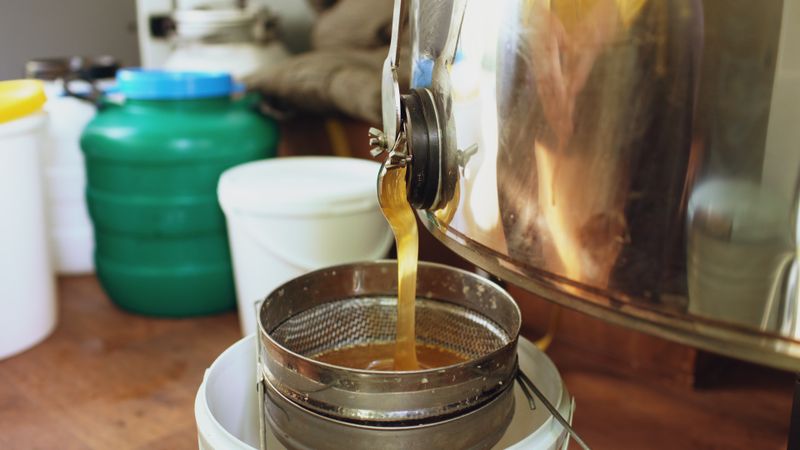
A honey extractor is fundamentally a centrifuge. You load uncapped frames into a drum, spin them at speed, and centrifugal force throws the honey outward against the drum wall. Honey runs down the wall, pools at the bottom, and drains out through a gate valve into your settling tank or jars. The intact comb remains on the frame, ready to be returned to the hive — where bees will clean, repair, and refill it next season.
This is the genius of the Langstroth frame system: extracted comb is incredibly valuable. Bees spend roughly 6–8 lbs of honey producing 1 lb of beeswax. Returning drawn comb to the hive instead of letting them start from scratch means dramatically faster honey production. Your extractor preserves that comb — making it one of the highest-ROI tools in your entire beekeeping operation.
Before extraction, you need to uncap the honey cells — remove the thin wax seal bees place over cured honey. This is done with an electric uncapping knife, an uncapping fork, or a capping scratcher. Our full honey extraction equipment guide covers uncapping tools in detail. This article focuses specifically on extractors.

Tangential vs Radial: Which Is Better?
This is the most important technical distinction in extractor design:
Tangential Extractors
Frames are mounted with one face pointing outward (tangent to the drum circle). The extractor spins, pulling honey from the outer face. You then flip the frame manually and spin the other side. Tangential extractors are simpler to build, cheaper, and work well for small batches. The main downside: you must flip frames mid-spin, and if the honey is thick (cold temperature), one side can blow out under centrifugal pressure before the other side is done. Most entry-level manual extractors are tangential.
Radial Extractors
Frames are mounted like spokes of a wheel with the top bar pointing outward toward the drum wall. When spun, centrifugal force acts perpendicular to the comb face — pulling honey out of both sides simultaneously. No flipping required. Radial extractors are faster, preserve comb better (less blow-out risk), and are preferred for larger volumes. The tradeoff: they're more expensive and require faster spin speeds to be effective, which usually means an electric motor.
For 1–3 hives: tangential is fine. For 4+ hives or anyone who processes frames regularly: radial is worth the investment in time savings alone. The Penn State Extension Bee Lab and the American Beekeeping Federation both recommend radial for any operation processing more than a few supers at a time.
Manual vs Electric
Manual extractors use a hand crank to spin the drum. They're cheaper, require no electricity or motor maintenance, and work anywhere. The downside is physical effort — cranking a 2-frame extractor for a full super of 10 frames takes real arm work, and maintaining consistent speed is harder than it sounds. For a single hive and one harvest per year, manual is perfectly workable.
Electric extractors use a variable-speed motor. You can dial in the right spin speed, run hands-free while you uncap other frames, and process far more volume without exhaustion. For 3+ hives or anyone harvesting multiple supers, electric pays for itself in convenience almost immediately. Electric motors also enable consistent radial spinning speeds, which is why most radial extractors are electric.
Top Picks for 2026
🏆 Best Budget: Happybuy 2-Frame Manual Tangential (~$90)
For beekeepers with 1–2 hives harvesting once per year, the Happybuy 2-Frame is hard to beat at this price. It's food-grade stainless steel (unlike some competitors' painted drums), holds deep and medium frames with included plastic frame holders, and has a functional gate valve at the bottom for easy draining. The crank is smooth enough for most users and the drum is large enough to avoid excessive splashing.
Limitations: you must uncap both sides and flip frames manually, which takes patience. The stand feet are somewhat flimsy — bolting or clamping it to a work surface during spinning is recommended. But for a $90 piece of stainless steel extraction equipment, you're getting genuine value. Many hobbyists use this extractor for years before upgrading.
Check Happybuy 2-Frame Price on Amazon →⚡ Best Mid-Range: VEVOR 4-Frame Electric Tangential (~$200)
The VEVOR 4-Frame Electric hits a sweet spot for beekeepers managing 2–4 hives. The variable-speed electric motor handles both slow starts (important — starting too fast shatters comb) and fast extraction speeds. The 4-frame capacity means you process a full 10-frame super in about 3 spins instead of 5 with a 2-frame, cutting extraction time nearly in half. The food-grade stainless drum is easy to clean, and the gate valve drains cleanly.
Like most electric tangential models in this price range, you still need to flip frames. But hands-free motorized spinning while you uncap more frames makes the workflow significantly more efficient than hand-cranking. VEVOR's customer support is also notably good — useful if anything arrives damaged in shipping.
Check VEVOR 4-Frame Price on Amazon →🔥 Best for Serious Hobbyists: Maxant 3100P 9-Frame Electric (~$500)
Maxant is an American beekeeping equipment company with decades of manufacturing heritage, and the 3100P is their flagship hobbyist model. This is where tangential transitions to radial: the 3100P holds 9 standard frames in a radial configuration, extracting both sides simultaneously without flipping. The 1/4 HP motor is robust and reliable, and the drum size handles multiple supers in a single session.
If you're managing 5–10 hives seriously and harvesting multiple supers, the Maxant 3100P is the extractor you graduate to and likely keep for 20 years. It's built in the US, backed by actual customer service, and the parts are available and serviceable. At ~$500 it's a real investment, but it's also a lifetime purchase for most hobbyist operations.
Check Maxant 3100P Price on Amazon →👑 Best Professional: Lyson 12-Frame Radial Electric ($800+)
Lyson is a Polish beekeeping equipment manufacturer known for professional-grade stainless construction at prices below equivalent American or German brands. Their 12-frame radial electric extractor is the choice for small-scale commercial operations or serious hobbyists who want to process multiple hives in a single afternoon. The variable-speed motor handles both honey types and frame sizes gracefully, and the larger drum diameter reduces splashing at high speeds.
At $800+, this is a significant purchase — but significantly less than equivalent-capacity American or European alternatives. If you're running 10+ hives and extraction days have become an all-day slog with smaller equipment, the Lyson turns a 6-hour harvest into a 2-hour one.
Check Lyson Extractor Price on Amazon →💰 Budget Alternative: Little Giant 2-Frame Manual (~$70)
The Little Giant 2-frame is the classic entry-level extractor — widely available, inexpensive, and works as advertised for very small harvests. It's tangential, plastic-and-stainless construction (the drum itself is stainless), and the crank mechanism is straightforward. For a beginner who wants to spend as little as possible while harvesting their first hive, this gets the job done. It's not as durable or polished as the Happybuy, but at $70 it's the cheapest viable option available.
Check Little Giant Price on Amazon →
Extractor Comparison Table
| Model | Type | Frames | Price | Best For |
|---|---|---|---|---|
| Little Giant Manual | Tangential, Manual | 2 | ~$70 | 1 hive, tight budget |
| Happybuy 2-Frame | Tangential, Manual | 2 | ~$90 | 1–2 hives, best budget pick |
| VEVOR 4-Frame Electric | Tangential, Electric | 4 | ~$200 | 2–4 hives, best mid-range |
| Maxant 3100P | Radial, Electric | 9 | ~$500 | 5–10 hives, serious hobbyist |
| Lyson 12-Frame Radial | Radial, Electric | 12 | $800+ | 10+ hives, semi-commercial |
What to Look For When Buying
Material: Stainless Steel Only
The drum and honey-contact surfaces must be food-grade stainless steel. Honey is acidic enough to leach compounds from cheaper materials, and plastic surfaces harbor bacteria in microscopic scratches. Some budget extractors use plastic drums — avoid these entirely. The gate valve (drain tap) should also be stainless or food-safe plastic. Check specifically that the frame baskets are metal, not plastic-coated wire that can corrode.
Frame Compatibility
Standard Langstroth deep frames (9⅛" tall) are the most common, but ensure your extractor also handles medium frames if you're using medium supers. Most extractors handle both with removable or adjustable frame holders. Check the manufacturer specs — some smaller extractors only handle one or the other without modification.
Variable Speed Motor (for Electric Models)
Variable speed is essential. Starting too fast shatters comb — you need to spin slowly for the first 30–60 seconds, gradually increasing to full extraction speed. A fixed-speed motor that only runs at high RPM will blow out comb, especially with freshly drawn wax. Look for motors with at least a low/medium/high switch, or better, a continuously variable speed dial.
Gate Valve Clearance
The honey drains out through a gate valve at the bottom of the drum. Make sure the extractor sits high enough (either via legs or placement on a table) that you can fit a standard 5-gallon bucket under the gate. Many cheap extractors have inadequate leg height — you end up tilting the whole unit or using a smaller container. Check the dimensions before buying.
Ease of Cleaning
You're cleaning this thing after every harvest. Look for minimal internal welds and corners where wax and honey can accumulate, a removable honey gate, and a smooth interior drum finish. Rinsing with warm water immediately after use is critical — honey crystallizes if left to sit and becomes extremely hard to remove from crevices once set.
Should You Rent or Buy?
If this is your first harvest season and you're running 1–2 hives, strongly consider renting from your local beekeeping club or association before buying. Most clubs maintain extraction equipment for member use — you typically pay $20–50/day for a quality radial extractor that would cost $500–1,000 new. Many beekeepers use club extractors for 2–3 years before deciding whether to invest in their own.
The math changes when:
- You're managing 3+ hives (multiple harvest sessions per year)
- Club scheduling is inflexible and conflicts with optimal harvest timing
- You're harvesting multiple times per season (spring honey + fall honey)
- Transportation of your supers to/from the club facility is inconvenient
At that point, owning your extractor — even a basic 2-frame manual — gives you the flexibility to harvest on your schedule when your honey is at peak ripeness.
For more on the complete extraction process, see our guides on harvesting honey for the first time and the full honey extraction equipment guide. And if you're wondering how much honey your hive might actually produce, our honey yield guide sets realistic expectations for your first season.
Resources consulted: American Beekeeping Federation equipment standards, Penn State Extension honey processing guidelines, USDA AMS Honey Program food safety standards, and Honey Bee Health Coalition best management practices.
Frequently Asked Questions
What is the best honey extractor for a beginner?
The Happybuy 2-Frame Manual Extractor (~$90) is the best starting point for 1–2 hives. It's affordable, stainless steel, and handles small harvests easily. For 3+ hives, upgrade to the VEVOR 4-Frame Electric (~$200) or rent a larger radial from your local beekeeping club.
What is the difference between a tangential and radial honey extractor?
Tangential extractors hold frames with one face outward — you spin one side, flip, then spin the other. Radial extractors hold frames like spokes with the top bar outward, extracting both sides simultaneously without flipping. Radial is faster, gentler on comb, and preferred for larger operations. Tangential works fine for small-scale harvests.
How many frames do I need in a honey extractor?
Match capacity to hive count: 1–2 hives = 2-frame; 3–5 hives = 4-frame electric; 5–10 hives = 9-frame radial electric; 10+ hives = 12-frame or larger radial. Undersized means more batches, not a dealbreaker at small scale.
Is stainless steel or plastic better for a honey extractor?
Always choose stainless steel for honey-contact surfaces. It's food-safe, easy to clean, doesn't harbor bacteria, and lasts decades. Plastic extractors are cheaper but degrade over time and are harder to sanitize. Never compromise on food contact surfaces.
Should I rent or buy a honey extractor?
For 1–2 hives in your first season, rent from a local beekeeping club ($20–50/day). Once you're managing 3+ hives consistently or harvesting multiple times per year, buying your own saves money within 2–3 seasons and gives full scheduling flexibility.
Get weekly guides from HiveMindGuide
No spam. Unsubscribe anytime.