Quick Answer
A swarm happens when half your colony leaves with the old queen to find a new home — it's natural, mostly harmless, and happens to almost every beekeeper eventually. If your bees swarm: don't panic, they're docile. If they've clustered nearby, you can catch them in a cardboard box or swarm trap and rehive them in 1–2 hours. To prevent swarming: add space early, split colonies in spring, and inspect every 7–10 days during peak season (April–June).
The first time you see a swarm you'll never forget it. A roaring mass of bees — thousands, maybe tens of thousands — boiling out of your hive in a dark, swirling cloud, then drifting toward the nearest tree and forming a fist-sized cluster that grows and pulses like something alive. It's extraordinary and alarming in equal measure.
Here's the thing: a swarm is actually a sign of success. Your colony was healthy enough to reproduce. The bees aren't angry or dying — they're doing what bees have done for millions of years. Understanding that changes everything about how you respond. This guide will walk you through the complete picture: the biology behind swarming, what to do in the moment, how to catch and rehive a swarm, and — most importantly — how to prevent it from happening in the first place.
Why Do Bees Swarm?
Swarming is the honeybee colony's primary method of reproduction — not individual reproduction, but colony-level reproduction. When a colony grows large enough and conditions are right, the existing queen leaves with roughly 40–60% of the worker population to find a new home. The remaining bees raise a new queen and continue the original colony. One colony becomes two.
The biological triggers are complex but the main drivers are:
- Overcrowding: The brood nest is packed, honey supers are filling up, and bees are clustered on the outside of the hive (called "bearding"). When bees run out of space to expand, swarming instinct kicks in.
- Queen age: Older queens produce less pheromone, which suppresses swarming instinct in workers. A colony with a 2-year-old queen is significantly more likely to swarm than one with a first-year queen.
- Genetics: Some bee strains (particularly Italian bees) swarm more readily than others (Carniolan bees have calmer swarming tendencies). Your local bee stock matters.
- Seasonal timing: The surge of spring nectar and brood production creates ideal conditions. Colonies that successfully overwinter arrive at spring with a large population and a shrinking queen's ability to suppress the swarm impulse.
According to research from Penn State Extension's Bee Lab, swarming is the single most common cause of hobby beekeepers losing colonies — not through death of the bees, but through the original hive losing its experienced workforce at a critical honey production window.
When Do Swarms Happen?
Swarming is a spring and early summer phenomenon in most of North America. The classic swarm season runs:
- Southeast US: March through May
- Mid-Atlantic and Midwest: April through June
- Pacific Northwest and Canada: May through July
Swarms are most likely on warm, calm, sunny days when temperatures reach 65°F (18°C) or above. Late morning is peak time — bees typically leave between 10 AM and 2 PM when the sun is high and scout bees have already identified potential new homes. Rainy, windy, or cold days essentially put swarming on pause.
Your first warning sign isn't the swarm itself — it's swarm cells. These are large, peanut-shaped queen cells built along the bottom edges of frames. If you find unsealed swarm cells during an inspection, you have roughly 8–10 days before the swarm may leave. Capped swarm cells mean you're down to 1–3 days. Act immediately. (Regular inspections every 7–10 days during swarm season are non-negotiable — see our hive inspection guide for what to look for.)

What a Swarm Looks Like (and Why It's Mostly Harmless)
A swarm begins suddenly and dramatically. In the space of a few minutes, thousands of bees pour out of the hive entrance in a loud, swirling mass. They circle the hive, the cloud expands, and then — as if following an invisible signal — they drift as a unit toward a nearby landing spot. A tree branch, a fence post, the side of your house, a parked car. The cluster forms within minutes, bees layering over each other until you have a buzzing, undulating mass the size of a football or larger.
This temporary cluster is where many beekeepers first encounter a swarm. And here's the critical thing to understand: swarms are remarkably docile. Bees leaving in a swarm have gorged on honey — they've loaded up with 2–3 days of food stores for the journey to their new home. A bee with a full honey stomach has difficulty flexing its abdomen enough to sting easily. More importantly, they have no home to defend. The hive that triggers defensive behavior doesn't exist yet. These bees are in a state of biological transition, focused entirely on following the queen and finding a new home.
According to the Honey Bee Health Coalition, most people can walk within a few feet of a clustered swarm without incident. A veil is still smart — you don't want bees caught in your hair or near your face — but full suit and gloves are usually overkill for swarm capture unless the cluster is enormous.
The cluster will stay in its temporary location for anywhere from 30 minutes to 3 days while scout bees evaluate potential permanent homes. Most swarms move on within 24 hours. If you're going to catch them, do it early — the longer they're clustered, the more likely they find a new home and leave permanently.
How to Catch a Swarm
What You'll Need
- A cardboard box or wooden nuc box (5-frame nuc ideal)
- A veil (minimum)
- Pruning shears or loppers if the cluster is on a branch
- A white sheet (optional — helpful for bees that fall)
- Nasanov pheromone lure or lemongrass essential oil
The Cardboard Box Method (Low Cluster)
When the swarm is clustered on a branch or bush within reach:
- Hold your box directly beneath the cluster. Work slowly and confidently — erratic movements alarm bees.
- Give the branch one sharp, decisive shake. The cluster should drop into the box. If you get the queen (which you won't see, but the bees will follow), the rest of the bees will join her.
- Flip a cover over the box, leaving a small entrance gap. Set the box near the swarm site. Within 15–30 minutes, bees still in the air should cluster toward the box entrance.
- Transfer to a prepared hive at dusk when all bees are in the box. Moving after dark means fewer bees flying and fewer left behind.
Swarm Trap Setup (Proactive Approach)
If you want to capture swarms before they cluster anywhere inconvenient — or catch neighboring feral swarms — set swarm traps in advance. A 40-liter wooden box positioned 10–15 feet off the ground with old dark comb inside and a Nasanov pheromone lure can attract swarms scouting in your area. Place them in late winter or early spring before swarm season. This is also an excellent way to grow your apiary without buying packages or nucs.
Shop Swarm Traps on Amazon →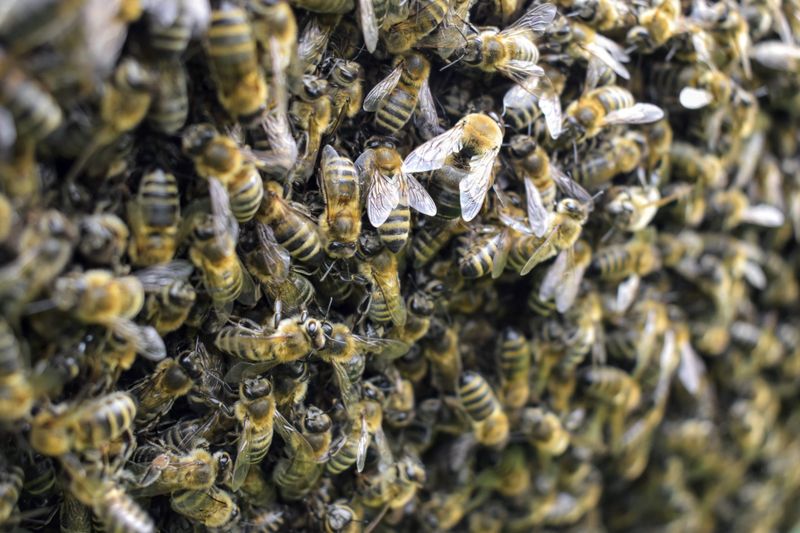
Rehiving a Swarm Step-by-Step
Once you've captured the swarm, you need to install it in a proper hive body. Here's how:
- Prepare your hive body. Have a complete 10-frame Langstroth setup ready with undrawn foundation or — even better — drawn comb from a previous hive. Drawn comb dramatically improves swarm acceptance and establishment speed. Add one or two frames of honey/pollen if you have them.
- Choose your timing. Install at dusk when flying bees are calming down. This gives the swarm a night to orient to their new home before morning flights begin.
- Pour or shake bees into the hive. Remove several frames from the center of your hive body, then simply pour the swarm from your collection box into the open space. Don't worry about being gentle — bees in this state are remarkably tolerant.
- Check for the queen (optional). You don't need to find her, but if you can spot her moving into the hive body from the box, you have confirmation she's in there. Her long abdomen and surrounded-by-workers movement pattern make her identifiable — see our queen identification guide for tips.
- Return frames and close up. Gently slide your frames back in and close the hive. Add an entrance reducer to help the small population defend their new home.
- Leave them for 5–7 days. Resist the urge to inspect. The swarm needs time to orient, begin drawing comb, and settle into their new home. Your first inspection should look for eggs (confirming the queen is laying) and new wax construction.
Feed newly rehived swarms with 1:1 sugar syrup for the first 2–3 weeks if there's no strong nectar flow. They need resources to draw comb quickly.

Swarm Prevention Techniques
The best swarm management is prevention. While no method is 100% foolproof (bees have been swarming for 30 million years and are very good at it), these techniques dramatically reduce your swarm rate:
1. Add Space Before They Need It
The most common mistake beginners make is waiting too long to add honey supers. By the time your brood boxes are packed, swarm preparations may already be underway. Add your first honey super when your brood boxes are 70–80% full — don't wait for 100%. In strong springs, you may need to add supers every few weeks.
2. Make a Preemptive Split
The most effective swarm prevention technique is to beat the bees to it. A controlled split in early spring — before swarm cells appear — mimics the swarming process without losing your bees or production. You divide one colony into two, removing the queen-right portion to a new hive. The original colony raises a new queen from the brood you left behind. See our detailed hive splitting guide for step-by-step instructions. Done right, a split in April means more total bees by June than you'd have with either swarming or no intervention.
3. Regular Queen Checks During Swarm Season
Inspect every 7–10 days from April through June. You're specifically looking for queen cells along the bottom and sides of frames. Finding unsealed queen cells gives you options: remove them all and add space (buys you another week), or use them to do a controlled split. Finding capped queen cells means the swarm may leave within 1–3 days. Act immediately.
4. Requeen with Young Queens
Queens older than 2 years have declining pheromone production, which weakens the colony's swarm suppression. Colonies headed by 1-year-old queens swarm at a much lower rate. Annual or biennial requeening — using locally raised queens if possible — is standard practice for swarming control.
5. Remove and Destroy Swarm Cells (Emergency Measure)
If you find swarm cells and don't want to split, you can remove all queen cells and add significant space. But this is a short-term fix only. If the underlying cause (overcrowding, old queen, genetics) isn't addressed, the colony will simply raise new swarm cells in a week. Use this technique to buy time for a split or a requeen, not as a permanent solution. The USDA Honey Program and most university extension programs recommend addressing root causes, not just removing cells.
Shop Swarm Prevention Supplies on Amazon →What If the Swarm Leaves Before You Catch It?
It happens. You come home to find your hive eerily quiet and half the bees gone, or you catch the tail end of the swarm as it lifts from the tree and vanishes over the fence line. Don't panic. Your original hive is fine. It has workers, it has brood, and it has queen cells developing. You've lost production time and half your foraging force for a few weeks, but the colony will rebound.
What to do with the original hive after a swarm:
- Leave one queen cell. If you see multiple capped queen cells, leave only the largest and most well-positioned one (typically on a central frame, not a corner). Destroy the others to prevent after-swarms (when a virgin queen leaves with another swarm before the first has mated — can happen 2–3 times from a single colony).
- Check back in 3 weeks. Allow the virgin queen to hatch, take her mating flights (5–7 days), and begin laying (another 7–10 days). Your first post-swarm inspection should look for eggs in approximately 21 days after the swarm left.
- Note for next year: That colony has strong swarming genetics. Consider requeening with a swarm-resistant strain next spring.
What Happens to Your Original Hive?
Behind all the drama, your original hive is running a remarkably organized succession plan. Before the old queen left, workers raised multiple queen cells. One virgin queen hatches first, typically on day 16 (8 days after the swarm left, since queen cells are usually about 8 days from capping to hatching). She'll immediately seek out and destroy any unhatched competitors — stinging them through their cell walls.
Your new virgin queen then takes one or more mating flights over 5–7 days, mating with 12–20 drones in the air from multiple colonies. This genetic diversity is critically important — a queen's mating quality determines the productivity and disease resistance of the entire colony for 2–4 years. Once mated and back in the hive, she'll begin laying within a week. The colony's population dip will be noticeable for about 4–6 weeks, then it rebuilds rapidly as her offspring mature.
Learn to recognize eggs, larvae, and developing queens by reading our queen identification guide — it'll help you confirm successful queen establishment without unnecessary stress.
Authority resources consulted for this guide: American Beekeeping Federation swarm management guidelines, Penn State Extension Bee Lab swarm prevention curriculum, Honey Bee Health Coalition colony management resources, and Ohio State University Extension Entomology swarm biology research.
Frequently Asked Questions
Is a bee swarm dangerous?
Swarms are generally very docile and rarely sting. Bees leaving in a swarm have gorged on honey and have no hive to defend. Most swarms can be approached within a few feet without incident. Always wear a veil as a precaution, but full protective gear is usually unnecessary for swarm capture.
Why do bees swarm?
Swarming is the colony's natural reproduction method. When overcrowded, the old queen leaves with about half the workers to find a new home. It's a sign of a healthy colony — though for beekeepers it means losing half your workforce and honey production temporarily.
How long does a bee swarm stay in one place?
Swarms typically rest in a temporary cluster for 30 minutes to 3 days while scouts search for a permanent home. Most move on within 24 hours. Act quickly — ideally within the first few hours — for the best chance of catching them.
What is the best swarm lure for catching wild swarms?
The most effective combination is Nasanov pheromone lure (mimics the bee's 'come here' signal) paired with old dark comb inside a swarm trap. Lemongrass essential oil is a popular DIY alternative. Position traps 10–15 feet off the ground in late winter or early spring before swarm season begins.
How do I prevent my bees from swarming?
The most effective methods: (1) Add honey supers before bees run out of space, (2) Do a preemptive split in early spring, (3) Requeen with young queens every 1–2 years, (4) Inspect every 7–10 days during spring and remove swarm cells before they're capped. No method is foolproof — experienced beekeepers still lose swarms occasionally.
Get weekly guides from HiveMindGuide
No spam. Unsubscribe anytime.