
Beekeeping gloves exist on a spectrum: maximum protection on one end, maximum dexterity on the other. Where you need to be on that spectrum depends on your experience level, your colony's temperament, the time of season, and your comfort with bee stings.
Most beginners start with full leather gloves and work toward thinner gloves as they become more comfortable and their colonies become more familiar. This is the right progression — not weakness.
The Three Main Glove Types
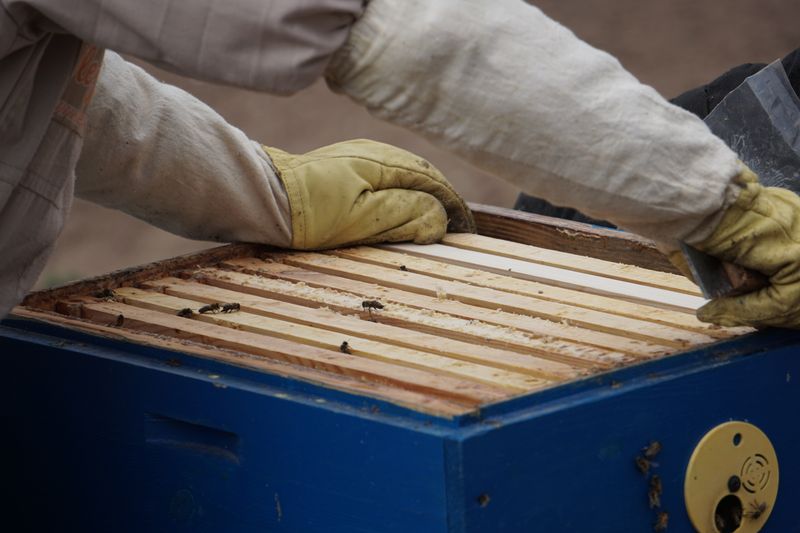
Leather Gloves (Best for Beginners)
Pros: Maximum sting protection, durable, covers wrists with gauntlet cuff, keeps bees out of gloves at the wrist
Cons: Reduced dexterity compared to thinner materials, hot in summer, may retain alarm pheromone if stung (clean promptly)
Best leather options:
- Mann Lake Deluxe Leather Gloves ($18–22): Standard recommendation for beginners. Cowhide with ventilated canvas gauntlet. Good dexterity for leather gloves.
- VIVO Full Grain Cowhide Gloves ($20–25): Thinner grain for better feel, longer gauntlet cuff than most budget options.
Check beekeeping leather gloves on Amazon
Nitrile/Latex Gloves (Best for Experience Beekeepers)
Pros: Excellent dexterity, can feel frames and bees, allows detection of queen presence by temperature, easy to clean, cheap enough to discard when stung
Cons: Bees can sting through thin nitrile; not suitable for aggressive colonies or defensive periods; wrist not protected unless you pull down your suit sleeve
Best nitrile approach: Double-layer exam gloves (wear two pairs) significantly improves sting resistance while maintaining good dexterity. Stock 100-pack boxes of nitrile exam gloves.
Check nitrile gloves on Amazon
Ventilated Mesh Gloves (Best for Hot Weather)
Pros: Leather palm with mesh back provides good protection with dramatically better airflow than full leather; some dexterity improvement over full leather
Cons: More expensive than plain leather; bees can occasionally sting through mesh back
Best ventilated options: Forest Beekeeping Supply ventilated gloves and VIVO ventilated models are both well-reviewed. Expect to pay $25–40 for quality ventilated gloves.
Check ventilated beekeeping gloves on Amazon
Glove Care and Alarm Pheromone Management
When bees sting your gloves, they release alarm pheromone — a chemical signal that recruits other bees to sting the same spot. This is why getting stung once often leads to getting stung twice in the same place:
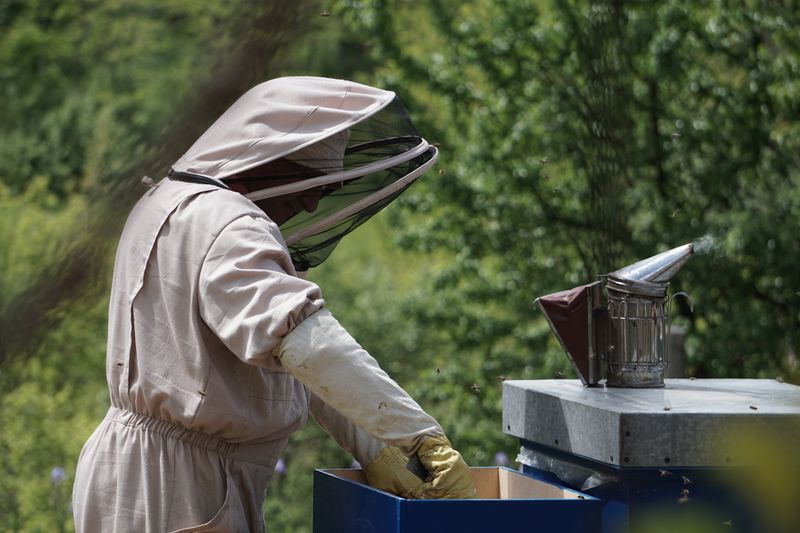
- Remove stingers from gloves immediately — scrape with the smoker or hive tool, not squeeze
- Wash leather gloves with soap and water after sessions where multiple stings occurred
- If gloves smell strongly of banana (isoamyl acetate = alarm pheromone), clean them before the next inspection or bees will respond defensively from the start
- Smoke over stung areas during inspection to mask alarm pheromone
For complete protective equipment including suits and veils, see our best beekeeping suits guide. For beginner gear overall including hives and tools, see our starter kit guide. For inspection technique that reduces sting incidents regardless of glove choice, see our hive inspection guide.
Frequently Asked Questions
What are the best beekeeping gloves for beginners?
The best beekeeping gloves for beginners are cowhide leather gloves with extended gauntlet cuffs. Cowhide provides maximum sting protection with reasonable dexterity, and the gauntlet cuff prevents bees from entering at the wrist. Recommended: the Mann Lake Deluxe Leather Gloves ($18–22) or the VIVO Full Grain Cowhide gloves ($20–25).
Do experienced beekeepers use gloves?
Many experienced beekeepers work without gloves on calm, queenright colonies to maximize dexterity and colony sensitivity. However, most keep gloves accessible for aggressive colonies, defensive periods, or inspections on rainy/cold days. Knowing when to use gloves is a mark of experience.
Are nitrile gloves good for beekeeping?
Nitrile gloves provide excellent dexterity and allow beekeepers to feel frames and bees much better than leather. They offer less sting protection — bees can sting through nitrile, though improved dexterity often means gentler handling and fewer stings. Best for experienced beekeepers working calm colonies. Double-layer nitrile improves protection.
What gloves are best for hot weather beekeeping?
For hot weather, ventilated mesh gloves (leather palms, mesh backs) are best — sting protection comparable to full leather with dramatically reduced heat buildup. Popular options include Forest Beekeeping Supply and VIVO ventilated models. In very hot climates, some experienced beekeepers use nitrile exam gloves for maximum airflow despite reduced protection.
Get weekly guides from HivemindGuide
No spam. Unsubscribe anytime.