Commercial Beekeeping Statistics 2026: Revenue, Operations & Market Trends
Commercial beekeeping is a billion-dollar industry in the United States, and a multi-billion-dollar sector globally. Unlike backyard beekeeping, commercial operations manage 500 to tens of thousands of hives, moving them across state lines for pollination contracts — particularly California's almond orchards, which alone demand nearly 2 million hives each February. With annual colony loss rates consistently exceeding 40%, rising operating costs, and ongoing consolidation toward fewer, larger operations, commercial beekeeping sits at the intersection of agriculture, ecology, and economics. This page presents the verified statistics on industry revenue, operational counts, hive rental markets, employment, and the trends shaping commercial apiculture through 2026.
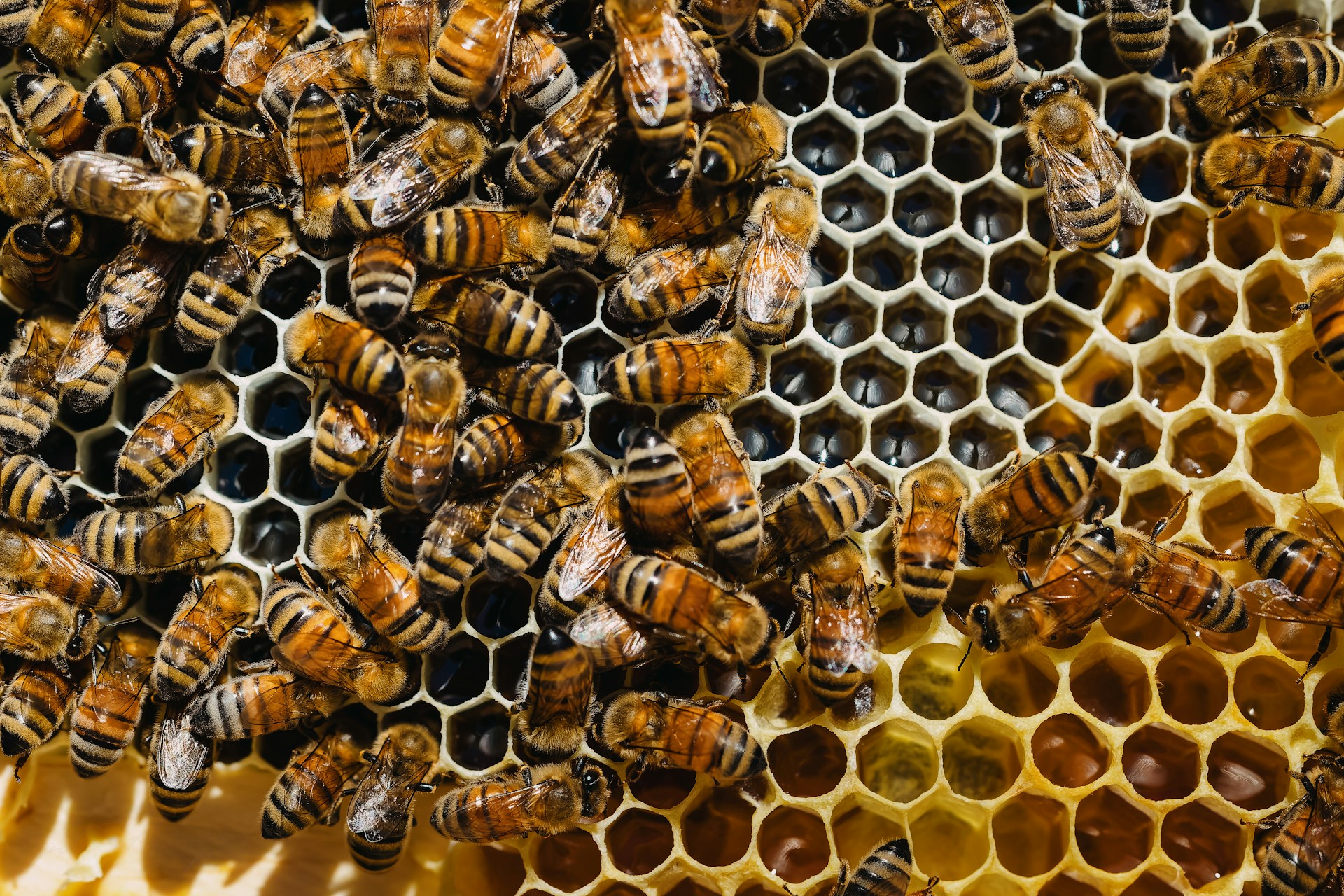
Industry Overview & Revenue
The U.S. beekeeping industry generates between $900 million and $1 billion in annual revenue, covering honey production, pollination services, queen and package sales, and wax production. Pollination services represent the largest and fastest-growing revenue segment.
Pollination services now account for over 60% of annual revenue for commercial beekeepers, with honey production representing the remainder. This represents a dramatic reversal from the 1990s, when honey was the primary income source. The shift has fundamentally changed how operations manage their calendar, leading to migratory beekeeping patterns that carry their own logistical and biological costs. — USDA ERS / California Polytechnic State University, 2023
The global beekeeping equipment and supplies market, including hives, protective gear, treatments, and extraction equipment, was valued at approximately $6.9 billion in 2024 and is expected to grow at a CAGR of 5.1% through 2030 — driven by the rising demand for pollination-dependent crops in developing countries. — Grand View Research, 2024
Per USDA ERS data, the total contribution of honeybee pollination to U.S. crop value is estimated at $15-20 billion annually — meaning the pollination services sold by beekeepers generate roughly 25x their direct cost in downstream crop value for almonds, apples, blueberries, cherries, avocados, cucumbers, melons, and over 80 additional crops that depend entirely or partially on honeybee visitation. — USDA ERS, 2023
Commercial Operations by Size
USDA NASS classifies beekeeping operations by colony count. The divide between backyard (under 50 colonies), sideliner (50-499), and commercial (500+) operations is significant in terms of economic function, management practices, and loss patterns.
A small number of mega-operations (defined by industry as 10,000+ colonies) control a disproportionate share of the commercial market. The largest 50 U.S. commercial beekeeping operations are estimated to own or manage approximately one-third of all U.S. colonies — roughly 800,000-900,000 hives among them. — Bee Culture Annual Beekeeping Survey / USDA NASS, 2023
The average commercial operation (500+ hives) manages approximately 3,200 colonies, though this average varies dramatically by state. California, home to the largest commercial operations, averages over 5,000 colonies per commercial operation. — USDA NASS 2022 Census of Agriculture
Pollination Services Market
Pollination contracts are the economic backbone of commercial beekeeping. Each year, roughly 2.7 million managed colonies are trucked to agricultural contracts — with almond pollination the dominant driver of the market.
Almond pollination in California is the single largest concentrated pollination event on Earth. Each February, approximately 1.9-2.1 million honeybee colonies — over 60% of all U.S. managed colonies — converge on California's Central Valley for the almond bloom. Over 1,200 beekeepers from across the country participate, with colonies trucked from as far as Florida, Texas, and North Dakota. — California Almond Board / USDA NASS, 2024
Beyond almonds, the top five U.S. crops by pollination rental spending are apples, blueberries, cherries, avocados, and cucumbers. Per USDA ERS, apple growers spend $50-$100 per hive for 2-3 weeks of bloom pollination. Blueberry contracts in the Pacific Northwest and Southeast typically command $80-$150 per hive. — USDA ERS, 2023
Hive rental rates for almond pollination have risen from approximately $55 per hive in 2002 to over $200 per hive in the 2020s — a 4x increase driven largely by colony shortages from sustained high loss rates and rising transportation costs. Some top-tier operations with high-health colonies now negotiate $250-$300 per hive. — Project Apis m. / California State Beekeepers, 2024
Employment & Wages
Commercial beekeeping is labor-intensive — managing thousands of hives requires skilled seasonal and year-round workers. Employment data for the industry is limited compared to other agricultural sectors but available through USDA and industry surveys.
The U.S. beekeeping industry directly employs an estimated 26,000 workers when including seasonal and part-time labor, per BLS and IBISWorld estimates. This number represents both full-time beekeepers and seasonal workers hired for pollination events, honey extraction, and winter feeding. — IBISWorld, 2024; BLS Occupational Outlook
Median annual wages for beekeeping workers in commercial operations are estimated at $36,000-$50,000, depending on experience, region, and season length. Skilled migratory beekeepers with queen rearing, disease management, and trucking coordination skills command higher salaries. The industry's reliance on H-2A temporary agricultural visas for seasonal labor has increased significantly since 2018. — BLS / USDA Farm Labor Survey, 2024
Queen and nuc producers represent a specialized employment segment within the industry. The largest queen producers — including California's Olivarez Honey Bees, Texas's Walker Honey Farm, and Georgia's Rossman Apiaries — each employ 15-40 workers year-round and produce hundreds of thousands of queens annually for both domestic and international markets. — Bee Culture Industry Survey, 2023
Hive Losses & Replacement Costs
The single greatest challenge facing commercial beekeepers is the sustained elevated rate of annual colony loss. Data from the Bee Informed Partnership's annual surveys reveals that the industry has normalized loss rates that would have been considered catastrophic twenty years ago.
Commercial operations lose hives at different rates depending on their primary business model. Beekeepers focused on pollination services — especially those making the cross-country almond migration — reported higher losses (46-52%) than operations primarily focused on honey production (35-40%) during the 2020-2024 survey years. The difference is attributed to the additional stress of long-distance trucking, concentrated disease exposure at almond staging sites, and the early-season timing of almond bloom when colonies are at their smallest and weakest. — Bee Informed Partnership, 2024
Summer losses — once relatively rare — now add significantly to total annual mortality. Bee Informed Partnership data shows summer losses averaging 18-22% nationally in recent years, driven largely by varroa mite collapse in colonies that were not adequately treated after spring splits. Commercial operators who maintain year-round integrated pest management programs report summer losses 10-15 percentage points lower. — Bee Informed Partnership, 2023
A commercial replacement nuc (4-5 frames of bees with a laying queen) costs between $160 and $250 as of 2025, up from approximately $120 in 2019. A package of bees (3 lbs with queen) costs $130-$180. For a 3,200-colony commercial operation with 45% annual loss, replacement alone costs over $200,000 per year — before factoring in feeding, treatment, labor, and transportation. — Industry pricing surveys / Bee Culture, 2025
Regional Distribution
Commercial beekeeping is concentrated in states with favorable climates, abundant forage, and access to pollination contracts. The geography of the industry reflects both historical density and economic opportunity.
North Dakota, South Dakota, Montana, and Minnesota form the "honey belt" of the northern Great Plains — where commercial operations summer their colonies to build up on clover, alfalfa, and wildflower forage. North Dakota alone produced approximately 31 million pounds of honey in 2023, the most of any state, and serves as a summering destination for over 800,000 colonies trucked in from southern and eastern states. — USDA NASS Honey Report, 2024
The two major queen-rearing regions are California (early spring queens for almond pollination contracts) and Georgia, the southeastern U.S. queen production hub. Georgia's queen producers ship hundreds of thousands of queens nationally each spring, taking advantage of the state's early flowering season and comparatively low varroa pressure during winter. — University of Georgia Honey Bee Program, 2024
Consolidation & Market Trends
Commercial beekeeping is undergoing structural change. The number of smaller operations is declining while the largest operations continue to expand — a pattern consistent with broader U.S. agricultural consolidation, but with beekeeping-specific drivers.
USDA NASS data from the 2017 and 2022 Censuses of Agriculture shows the number of operations with 50-499 hives declined by approximately 12% over the five-year period, while operations with 5,000+ hives increased in both count and total colonies managed by approximately 8%. The total number of colonies remained relatively stable — the consolidation is a concentration of ownership, not a population issue. — USDA NASS Census of Agriculture, 2017 vs 2022
The economics of consolidation are driven by three factors: the capital cost of trucking equipment (a single tractor-trailer with a flatbed and boom can cost $200,000-$300,000), the investment required for effective varroa management (labor and treatment costs that scale sub-linearly), and the negotiating power of large operations in almond pollination contracts. Larger operators secure higher per-hive rates and priority access to the most desirable orchard contracts. — California State Beekeepers Association, 2024
A growing trend among commercial operations is the adoption of alternative pollination technologies including mechanized pollen application systems and the use of managed bumblebee and mason bee populations for specific crops. However, honeybees remain irreplaceable for almond pollination — no other system matches their scale — and the almond industry's dependence on honeybees continues to drive demand growth for commercial beekeeping services. — Project Apis m., 2024
Explore More Statistics
- Honey Bee Population Statistics by Country — Global managed hive counts and regional trends
- Colony Collapse Disorder Statistics 2026 — Documented losses, research, and current status
- Beekeeping Guides — Practical advice for beekeepers of all levels
HiveMindGuide. (2026). Commercial Beekeeping Statistics 2026: Revenue, Operations & Market Trends. Retrieved from https://hivemindguide.com/stats/commercial-beekeeping-statistics-2026
Frequently Asked Questions
How many commercial beekeeping operations are there in the United States?
According to the 2022 USDA NASS Census of Agriculture, approximately 2,700 commercial operations manage 500 or more colonies in the United States. These operations own 75-80% of all U.S. managed honeybee colonies. The total number of beekeeping operations of all sizes is estimated at roughly 85,000, but the vast majority are backyard hobbyists with fewer than 50 hives.
What is the main source of income for commercial beekeepers?
Pollination services have overtaken honey production as the primary revenue source for most commercial operations, accounting for over 60% of annual income. Almond pollination in California is the single largest market, drawing 1.9-2.1 million colonies each February and generating an estimated $400-500 million in pollination rental fees annually. Honey production and byproducts (wax, propolis, pollen, royal jelly) provide the balance of commercial revenue.
How much do beekeepers get paid for almond pollination?
Almond pollination rental rates averaged $200-250 per hive for the 2024-2025 season, up from approximately $55 per hive in 2002. Rates vary based on colony strength (frame count and population), health certification, and a beekeeper's track record. Top-tier operations with strong, healthy colonies can negotiate $250-300 per hive. The rate typically includes delivery and pickup within a specified window during the February-March almond bloom.
What percentage of commercial hives are lost each year?
Commercial operations in the United States lost an average of 40-50% of their colonies annually between 2020 and 2024, according to Bee Informed Partnership surveys. This is significantly higher than the 15-20% winter loss rate that beekeepers considered sustainable in previous decades. Summer losses, once uncommon, now add 18-22% to total annual mortality. Beekeepers must replace roughly 44% of their colonies every year just to maintain their herd size.
Why are small beekeeping operations declining?
Small to midsize operations (50-499 hives) declined by approximately 12% between 2017 and 2022, per NASS census data. The economics increasingly favor larger operations due to the high capital costs of trucking equipment, the labor intensity of effective varroa management at scale, and the negotiating power of large operators in the almond pollination market. Small operators who cannot afford the transportation infrastructure to participate in the almond circuit face narrower margins from honey production alone.
Get weekly beekeeping research from HiveMindGuide
No spam. Unsubscribe anytime.