Colony Collapse Disorder Statistics 2026: Documented Losses & Research
Colony Collapse Disorder (CCD) became a household term in 2006 when U.S. beekeepers began reporting unprecedented mass colony disappearances: worker bees were vanishing without trace, leaving behind honey, brood, and a queen — but no dead bees. At its peak, CCD was attributed to losses of 30–90% of hives in affected operations. Despite more than 15 years of intensive research involving USDA ARS, EPA, universities, and international agencies, CCD's precise cause remains contested. Current scientific consensus points to a combination of varroa mite infestation, multiple pathogens, pesticide exposure, and nutritional stress acting synergistically. This page compiles the documented statistics on CCD incidence, documented losses, research milestones, and the current scientific understanding of CCD's relationship to ongoing colony loss.
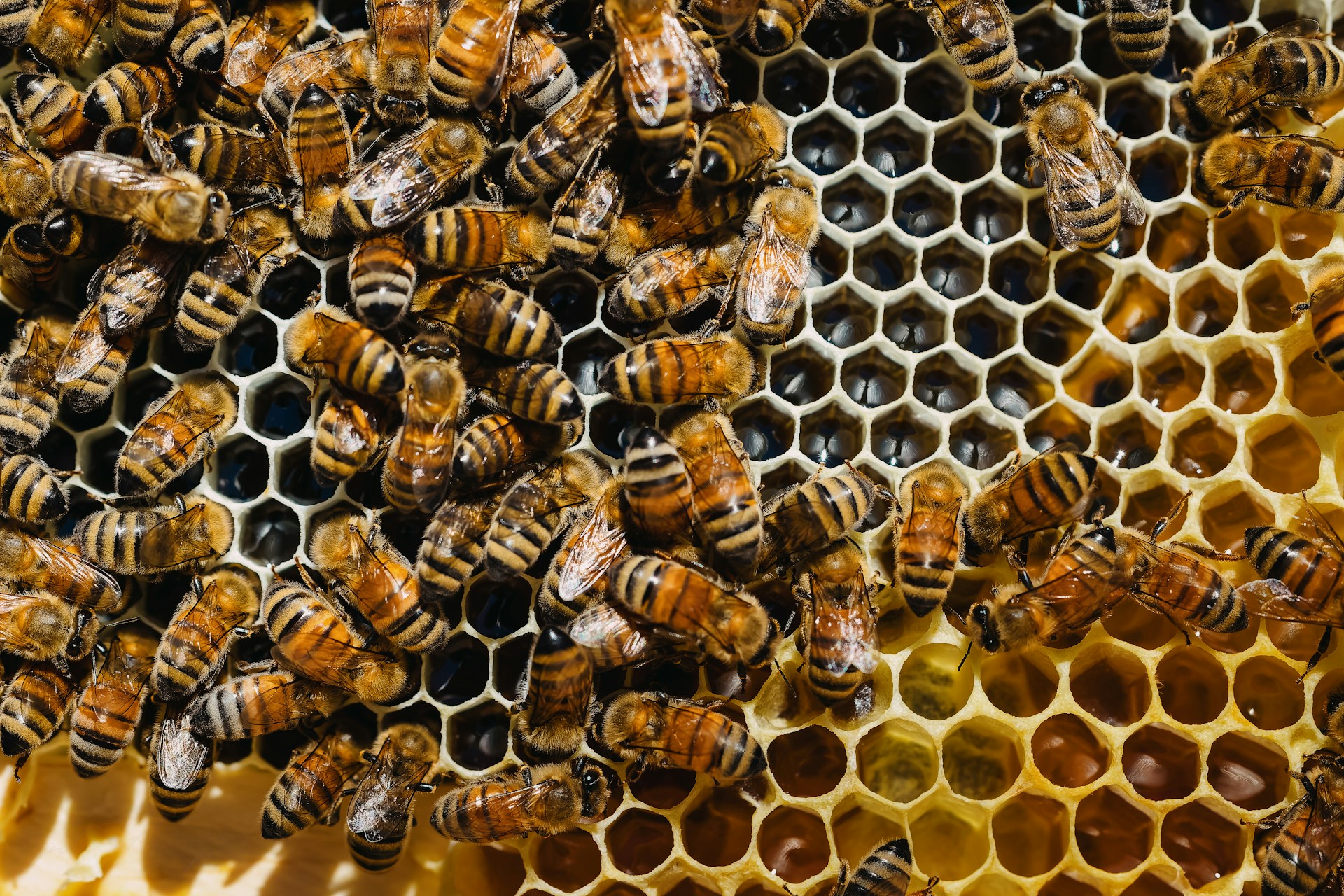
CCD Definition & Diagnostic Criteria
CCD is a specific syndrome distinct from general colony loss. Its diagnostic criteria, established by the USDA ARS and colony health researchers, require a distinctive pattern of hive abandonment.
A colony is diagnosed as a CCD case when it meets all three of the following criteria: (1) rapid loss of adult worker bees, (2) few or no dead bees found inside or outside the hive, and (3) the presence of capped brood and food stores — indicating the colony was thriving shortly before collapse. — USDA ARS Colony Collapse Disorder Progress Report, 2010
CCD was first formally reported and named in late 2006, when U.S. commercial beekeeper David Hackenberg reported losing 400 of 3,000 hives to the phenomenon. USDA ARS convened the first CCD Working Group in 2007. — vanEngelsdorp et al., Journal of Apicultural Research, 2009
Retrospective analysis by researchers identified similar mass colony disappearances in historical records dating back to the 1880s (called "disappearing disease"), 1918, and sporadically in the 1960s and 1970s — suggesting CCD is a recurring pattern potentially triggered when multiple stressors align. — USDA ARS CCD Working Group, 2009
Peak CCD Loss Years
CCD reports were most concentrated in the winters of 2006–2007 through 2012–2013, with beekeepers reporting the most dramatic abandonment-pattern losses during this period.
Surveys conducted in 2007–2009 found that approximately 35% of commercial beekeepers in the U.S. reported experiencing CCD-consistent colony losses — meaning the distinctive abandonment pattern rather than standard winter mortality. — USDA ARS CCD Progress Report, 2010
CCD-specific diagnostic reports declined significantly after 2013 in the Bee Informed Partnership surveys, even as total colony loss rates remained elevated. By 2015–2016, BIP surveys found that fewer than 1 in 10 beekeepers reported the specific abandonment-pattern syndrome of CCD — though overall losses remained above 40%. — Bee Informed Partnership, 2016
Economic Impact of CCD
The economic impact of CCD-era losses rippled through U.S. beekeeping and agriculture, creating colony shortages that drove pollination rental prices higher and strained almond and other crop supply chains.
Key Research Findings
Over 15 years of CCD research has produced important findings on pathogen load, pesticide exposure, and nutritional health in affected versus healthy colonies.
The landmark 2010 CCD investigation by USDA ARS (Cox-Foster et al. extended work) found that CCD-affected colonies had a significantly higher pathogen load — averaging 2.4× more pathogens per colony than non-CCD colonies, with Nosema ceranae and multiple viruses prominently detected. — vanEngelsdorp et al., PLOS ONE, 2009
A 2014 USDA/University of Maryland study analyzing 35 different pesticide compounds in pollen collected from hives near agricultural areas found that miticide residues from within the hive (used to treat varroa) were present at levels potentially harmful to colony immune function — a counterintuitive finding implicating beekeeper-applied treatments. — Pettis et al., PLOS ONE, 2013; USDA ARS, 2014
Research by the USDA ARS has demonstrated that CCD-affected colonies frequently show disrupted gut microbiome profiles — with reduced populations of key bacteria including Snodgrassella alvi and Gilliamella apicola. These disruptions correlate with increased vulnerability to Nosema and viral infections. — USDA ARS / Kwong & Moran, 2016
A multi-year USDA ARS study across seven states found that colonies managed on migratory routes — the California almond circuit in particular — had consistently higher CCD-pattern loss rates than stationary colonies, pointing to the stress of transport, altered forage, and shared pathogen exposure across thousands of hives at single sites. — USDA ARS CCD Reports, 2008–2012
Suspected Causes & Evidence
No single cause of CCD has been definitively established. The scientific consensus supports a multi-factorial model in which several stressors interact to trigger colony abandonment.
Varroa + virus complex: High varroa loads significantly increase circulating virus levels, including Deformed Wing Virus, Black Queen Cell Virus, and Sacbrood. Studies show colonies with varroa-amplified viral loads display worker bee behavioral abnormalities consistent with CCD-type disappearance — including impaired navigation and early death away from the hive. — Genersch et al., Bee World, 2010; USDA ARS, 2012
Pesticide sublethal effects: Neonicotinoid exposure at field-realistic concentrations impairs honeybee learning and memory, reduces forager homing success rates by 24–41%, and reduces the probability of foragers returning to the hive — a pattern strikingly consistent with CCD's missing bees. — Henry et al., Science, 2012; Gill et al., Nature, 2012
Nosema ceranae: This microsporidian gut parasite was identified at elevated prevalence in CCD-affected colonies. Spanish researchers (Higes et al., 2009) proposed it as the primary CCD cause, though subsequent research found it present in healthy colonies as well — suggesting it contributes but is not solely responsible. — Higes et al., Environmental Microbiology, 2009; USDA ARS, 2012
Nutritional deficiency: Colonies fed protein-deficient diets (due to monoculture forage or pollen dearth) show suppressed immune gene expression, increasing susceptibility to all other stressors. Research links nutritional stress to accelerated development of the CCD syndrome under multi-pathogen conditions. — Di Pasquale et al., PLOS ONE, 2013
Current Status of CCD (2020s)
CCD as a formally diagnosed syndrome has declined in reported frequency since its peak years, though total colony loss rates remain critically elevated. The distinction matters for research and policy.
USDA ARS researchers have noted that CCD as a distinct syndrome may have become "subsumed" into general high-loss patterns as varroa management failures and pesticide pressure produce widespread poor colony health — making the specific diagnostic pattern harder to distinguish from background losses. — USDA ARS, Colony Health Research Update, 2020
The Bee Informed Partnership's 2022 and 2023 surveys recorded the highest total annual loss rates in the survey's history — yet fewer beekeepers attributed losses to the specific CCD pattern. This divergence suggests the colony loss crisis has shifted rather than resolved. — Bee Informed Partnership, 2023
Europe has reported CCD-consistent events less frequently than the U.S., though winter loss rates remain elevated. The EU's lower CCD incidence has been tentatively linked to stricter neonicotinoid regulations and different varroa management practices — though the association remains correlation, not confirmed causation. — COLOSS / EFSA, 2022
Federal Research & Response
CCD prompted significant federal investment in pollinator health research, monitoring infrastructure, and regulatory review of agricultural chemicals.
USDA invested over $50 million in CCD and colony health research from 2007 through 2020 across USDA ARS labs, cooperative agreements with universities, and Specialty Crop Research Initiative grants. — USDA ARS Colony Health Research Budget, 2021
The National Strategy to Promote the Health of Honeybees and Other Pollinators (2015) — produced by the Presidential Pollinator Health Task Force — set a target of reducing managed honeybee colony losses to 15% or below per winter over 10 years. This target has not been achieved as of 2024. — White House Pollinator Health Task Force, 2015
EPA completed registration reviews of imidacloprid, clothianidin, thiamethoxam, and dinotefuran (major neonicotinoids) between 2017 and 2020, concluding that some uses — particularly foliar applications during bloom — "likely pose risks" to managed bees. Full mitigation measures remained under review as of 2024. — U.S. EPA Pollinator Assessments, 2017–2024
The Bee Informed Partnership — established in 2012 with USDA National Institute of Food and Agriculture funding — has conducted annual managed colony loss surveys across thousands of U.S. beekeepers, creating the most comprehensive longitudinal dataset on colony health in the world. — Bee Informed Partnership, founded 2012
HiveMindGuide. (2026). Colony Collapse Disorder Statistics 2026: Documented Losses & Research. Retrieved from https://hivemindguide.com/stats/colony-collapse-disorder-statistics-2026
Frequently Asked Questions
What exactly is Colony Collapse Disorder?
Colony Collapse Disorder is a specific syndrome characterized by the rapid, unexplained disappearance of adult worker bees from otherwise healthy-looking hives. The defining diagnostic feature is that bees vanish without a visible die-off — no dead bees are found near the hive. Honey stores, capped brood, and the queen remain, but the colony cannot function without workers and collapses. It is distinct from standard winter mortality.
Has the cause of Colony Collapse Disorder been found?
No single cause has been definitively established. The current scientific consensus supports a multi-factorial model: high varroa mite loads amplify virus infections, sublethal pesticide exposure impairs bee navigation and immune function, Nosema gut parasites reduce colony resilience, and nutritional deficiency from monoculture landscapes exacerbates all of these stressors. When several of these factors coincide, colonies may cross a tipping point into collapse.
Is CCD still happening in 2026?
Formal CCD diagnoses (the specific abandonment-pattern syndrome) have declined significantly since their 2007–2013 peak. However, total U.S. colony loss rates remain above 40% annually — far above acceptable thresholds. Researchers suggest the underlying stressors that caused CCD remain active but now produce a broader pattern of colony failure rather than the distinct abandonment syndrome originally described.
How much did CCD cost the U.S. economy?
At the peak of CCD-era losses (2008–2010), estimates of annual economic losses from CCD-related colony shortages reached $1.68 billion or more, primarily from reduced crop pollination capacity and escalating pollination rental rates. Almond pollination contracts tripled in price from 2002 to 2009, and the entire specialty crop supply chain absorbed higher costs as replacement colonies had to be sourced urgently.
How is CCD different from regular colony loss?
Standard colony loss — from starvation, varroa, queen failure, or winter cold — produces dead or dying bees in and around the hive. CCD is defined by the absence of dead bees despite colony collapse. This distinctive feature suggests the worker bees are leaving the hive and dying elsewhere, likely because disease, toxins, or disorientation prevents them from returning. Most colony losses today are not classified as CCD even when rates are extremely high.
Get weekly beekeeping research from HiveMindGuide
No spam. Unsubscribe anytime.