Pollinator Decline Statistics 2026: How Many Bees Are We Losing?
Pollinators — including honeybees, wild bees, butterflies, moths, beetles, and hoverflies — are in measurable decline across most of the world's agricultural and natural landscapes. Unlike managed honeybee losses, which are tracked by USDA and Bee Informed Partnership surveys, wild pollinator declines are documented through species range surveys, long-term museum collection comparisons, and citizen science platforms like iNaturalist. The Intergovernmental Science-Policy Platform on Biodiversity and Ecosystem Services (IPBES) flagged pollinators as one of the most threatened animal groups globally in their landmark 2019 assessment. This page brings together the most critical statistics on pollinator population trends, habitat loss drivers, threatened species counts, and economic consequences of pollinator decline.
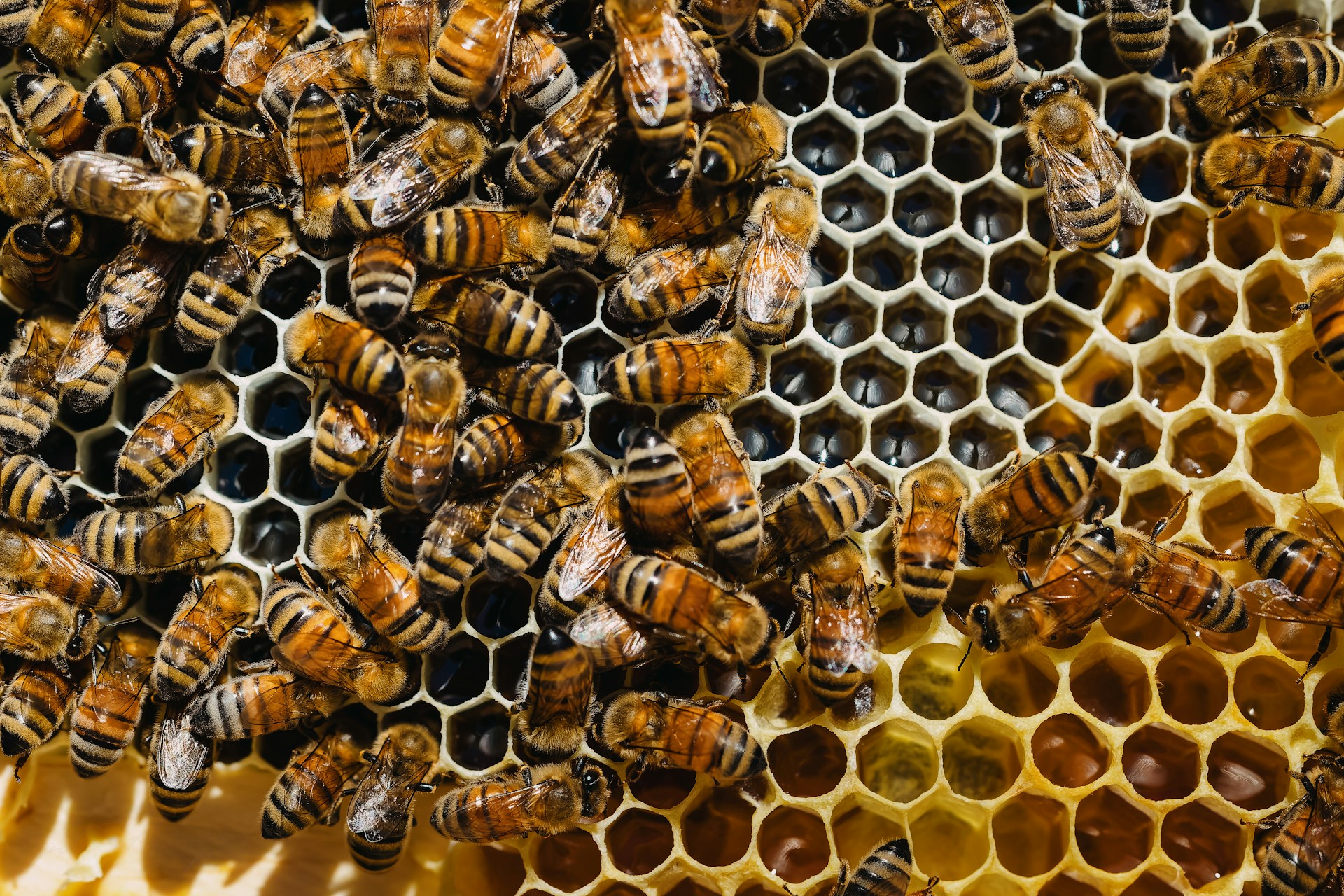
Population Decline Rates
Long-term monitoring studies document measurable declines in pollinator abundance and diversity across multiple continents and biomes.
A 2021 global analysis of wild bee records (Zattara & Aizen, One Earth) found that citizen science and museum specimen data show a 25% decline in the number of distinct wild bee species reported globally since the 1990s — a trend driven by habitat loss, pesticides, and climate shifts. — Zattara & Aizen, One Earth, 2021
North American bumblebee populations have declined dramatically. A 2020 study found that the probability of a bumblebee being present in a given location has declined by 46% across North America over the past century. — Soroye et al., Science, 2020
Wild Bee Species at Risk
There are approximately 20,000 recognized bee species globally. While most monitoring focuses on managed honeybees, it is wild native bees that provide most natural ecosystem pollination services.
Of the 4,000+ bee species native to North America, the IUCN Red List has assessed only a small fraction. Of those assessed, approximately 28% are listed as Vulnerable, Endangered, or Data Deficient — indicating the decline likely extends well beyond well-studied bumblebee species. — IUCN Red List / Xerces Society, 2022
The rusty patched bumblebee (Bombus affinis) was listed as Endangered under the U.S. Endangered Species Act in 2017 — the first bee to receive such listing in the continental U.S. Its population has declined by an estimated 87% since the 1990s. — U.S. Fish & Wildlife Service, 2017; Xerces Society, 2022
The western bumblebee (Bombus occidentalis) has disappeared from over 90% of its former range in western North America since the late 1990s, with commercial pathogen transmission from reared colonies implicated as a primary driver of initial collapse. — Cameron et al., PNAS, 2011
Habitat Loss & Land Use
Agricultural intensification and urban expansion are the primary drivers of habitat loss for pollinators, eliminating flowering plants and nesting sites essential for wild bee survival.
Global cropland expanded by approximately 10% between 2000 and 2020, often replacing semi-natural habitats that support wild pollinators. Simultaneously, agricultural field sizes have grown while hedgerows and field margins — key wild bee nesting corridors — have shrunk. — FAO / Our World in Data, 2022
In the United States, grassland area has declined by approximately 53 million acres since 1982, with the Conservation Reserve Program (CRP) preventing some conversion — but CRP enrollment has fallen from a peak of 36.8 million acres (2007) to approximately 22 million acres by 2022. — USDA NRCS / FSA, 2023
England has lost over 97% of its traditional wildflower meadows since the 1930s, primarily to agricultural intensification. These meadows are considered the most critical habitat for UK wild pollinators. — Plantlife International / UK Government Wildflower Survey, 2022
Monoculture agriculture — which now dominates much of the U.S. Midwest and plains — provides only brief, intense blooms followed by extended forage deserts. A study in Iowa found that wild bee diversity dropped by 50% as local landscape became dominated by corn and soybean monocultures. — Rundlöf et al. / Iowa State University extension, 2020
Pesticide Impacts on Pollinators
Pesticide exposure — particularly neonicotinoid insecticides — has been documented as a major contributor to both managed and wild bee decline through lethal and sublethal effects.
Approximately 90% of the world's agricultural fields are treated with at least one class of synthetic pesticide. Neonicotinoids are now the most widely used class of insecticides globally, with over 400 million acres of crop treated annually worldwide. — EFSA / Pesticide Action Network, 2019–2022
Field-realistic neonicotinoid exposure impairs bee reproduction: a large-scale field trial in Canada, Hungary, and the UK (the BEEHAVE study) found that clothianidin and thiamethoxam exposure reduced Bombus terrestris colony reproductive success by 26–44% at field-realistic doses. — Woodcock et al., Science, 2017
A 2023 meta-analysis of 231 studies found that wild bee populations in neonicotinoid-exposed landscapes showed 28% lower abundance and 18% lower species richness compared to control areas — effects stronger than those seen in managed honeybees due to smaller colony buffers. — Woodcock et al. meta-analysis, Environmental Science & Technology, 2023
Glyphosate, the world's most widely used herbicide, indirectly harms pollinators by eliminating flowering weeds that serve as critical forage. Studies also suggest sublethal gut microbiome disruption in bees exposed to field-realistic glyphosate concentrations. — Motta et al., PNAS, 2018
Climate Change Effects on Pollinators
Climate change alters the geographic ranges, seasonal activity windows, and phenological synchrony between pollinators and flowering plants — creating mismatches that reduce foraging success.
Bumblebee ranges have contracted southward by an average of 300 km in North America and Europe over the past century as warming reduces suitable habitat in the south — without equivalent northward expansion to compensate. — Kerr et al., Science, 2015
Climate projections suggest bumblebee habitat suitability could decline by 73% in North America and 46% in Europe under high-emissions scenarios by 2080. — Kerr et al., Science, 2015
Phenological mismatch — where flowers bloom before or after bees become active — has been detected in long-term datasets across Europe and North America. A 2020 study in Thoreau's Concord, Massachusetts, found that plant flowering advanced by 24 days since 1850, while bees have not fully tracked this shift. — Ellwood et al., PLOS ONE, 2012; updated analyses 2020
Winter weather extremes — both unusually warm winters (disrupting bee dormancy cues) and sudden late cold snaps — are becoming more frequent with climate change and have been documented to cause elevated winter bee mortality in North America and Europe. — USDA ARS climate vulnerability reports, 2022
Economic Impact of Pollinator Decline
The economic consequences of sustained pollinator decline would extend well beyond beekeeping, threatening food security for billions of people and disrupting global agricultural supply chains.
A full loss of animal pollination services is estimated to reduce global fruit and vegetable supply by 23%, potentially causing up to 1.4 million additional deaths annually from diet-related diseases due to reduced access to nutritious foods. — Smith et al., Lancet Planetary Health, 2015
In the U.S., the most pollinator-dependent crops by value include almonds, blueberries, cranberries, avocados, and cherries. Combined, these crops represent over $15 billion in annual farm-gate value. Their yields would collapse without managed or wild pollination services. — USDA ERS, 2022
Conservation Status Data
Government and conservation organizations have responded to pollinator decline with policy interventions, habitat restoration programs, and monitoring initiatives.
The USDA invested approximately $82.5 million in pollinator habitat restoration and research under the 2022 Farm Bill and related programs, including monarch butterfly and bumble bee conservation efforts. — USDA NRCS, 2023
The European Union's Pollinators Initiative (launched 2018, revised 2023) targets the reversal of pollinator decline by 2030. Under the EU Nature Restoration Law (2023), member states must restore at least 20% of degraded land and sea by 2030 — including habitats critical for pollinators. — European Commission, 2023
The U.S. Pollinator Health Task Force — established by executive order in 2014 — set a goal to restore or enhance 7 million acres of pollinator habitat across federal lands over five years. Progress has been documented on approximately 3.2 million acres as of the last federal progress report. — USDA / EPA Joint Pollinator Report, 2022
Citizen science projects tracking pollinators — including the iNaturalist Bee Watch and Great Sunflower Project — have collectively gathered over 50 million pollinator observation records in North America, providing critical baseline data for future trend analysis. — iNaturalist / Great Sunflower Project, 2024
HiveMindGuide. (2026). Pollinator Decline Statistics 2026: How Many Bees Are We Losing? Retrieved from https://hivemindguide.com/stats/pollinator-decline-statistics-2026
Frequently Asked Questions
How many bee species are going extinct?
IPBES estimates that approximately 40% of invertebrate pollinators — including bees and butterflies — face extinction globally. Of North America's roughly 4,000 native bee species, assessments by the Xerces Society and IUCN find that approximately 1 in 4 is in decline. However, most species lack sufficient data for formal status assessments, meaning the true scale may be larger.
Are wild bees in greater danger than honeybees?
Yes. Managed honeybees (Apis mellifera) are supported by beekeepers who actively replace lost colonies through splits and package purchases. Wild bee species have no such buffer — when their populations collapse, there is no managed intervention. Wild bees also face threats from commercial bee pathogen spillover in addition to habitat loss, pesticides, and climate change.
What is the biggest threat to pollinators?
Habitat loss from agricultural intensification and urban expansion is consistently ranked as the primary driver of pollinator decline by IPBES and most academic reviews. Pesticide exposure (especially neonicotinoids), parasites and pathogens, invasive species, and climate change are additional major stressors — and these factors typically interact, compounding their individual effects.
How much food production depends on pollinators?
Approximately 75% of the world's leading food crops depend at least partially on animal pollination, and 35% of global food production volume requires pollinator services. The economic value of this contribution is estimated at $235–577 billion annually. Key crops including almonds, blueberries, and avocados would see catastrophic yield reductions without pollinators.
Is pollinator decline reversible?
Research suggests pollinator populations can recover where habitat is restored and pesticide pressure is reduced. Studies from rewilded farmland in Europe show significant rebounds in wild bee diversity within 5–10 years of habitat restoration. However, species that have already experienced severe range contraction (such as the rusty patched bumblebee) may require active conservation intervention beyond habitat restoration alone.
Get weekly beekeeping research from HiveMindGuide
No spam. Unsubscribe anytime.